7-Day Nile Dahabiya Cruise from Luxor – 6 Nights

Dahabiya route from Luxor: Luxor → Esna → El Kab → Edfu → Kom Ombo → Aswan
| Boutique dahabiya for just 8–12 guests | All-inclusive Nile cruise | Private English-speaking Egyptologist guide | Abu Simbel excursion included

This 7 day Nile Dahabiya cruise from Luxor is a journey through Egypt on a traditional sailing boat, with 6 nights on board. It is a chance to discover the picturesque landscapes of the Nile Valley and soak up the atmosphere of travelling along one of the world’s most famous rivers. Explore the detailed itinerary, accommodation, price and booking options below.

Price:

From 8500€ / adult
From 850€ / child

Need help before you book?
Contact us

Why Book With Us?

  • Easy online booking
  • Best price guarantee
  • English-speaking tour representative
  • 24/7 customer support
  • Insurance included

Highlights of the 7 Day Nile Dahabiya Cruise from Luxor

Key Information – Nile Dahabiya Cruise from Luxor

Duration
7 days / 6 nights
Route
Luxor → Esna → El Kab → Edfu → Kom Ombo → Aswan
Departure
Every Saturday
Boat type
Boutique dahabiya sailing boat
(only 8–12 guests)
Board
Premium all inclusive
Guiding
Private English-speaking Egyptologist guide
An authentic Nile journey

What Is a Dahabiya?

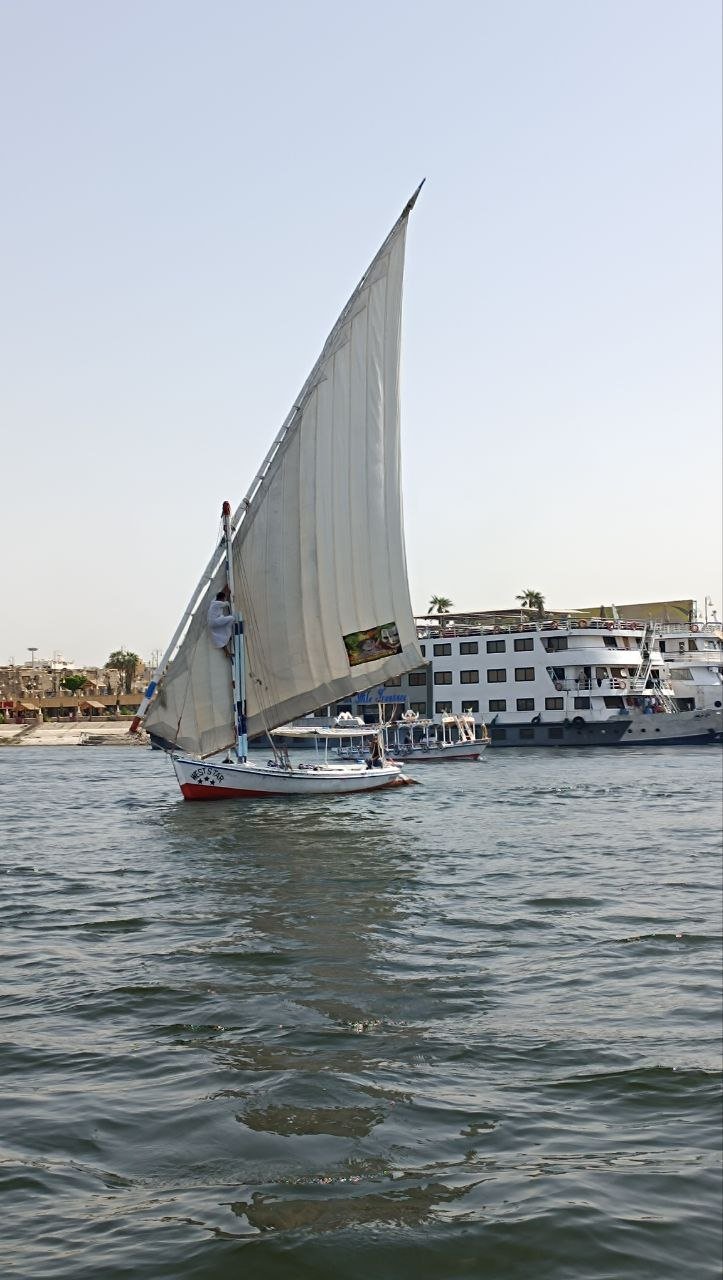
A dahabiya is a traditional Egyptian sailing boat that has plied the Nile for centuries. In the 19th century, famous figures such as Gustave Flaubert, Florence Nightingale and Agatha Christie travelled through Upper Egypt on these elegant boats.

Today, a dahabiya cruise from Luxor combines the romance of bygone days with modern comfort. Instead of large cruise ships, you discover the Nile calmly and exclusively, far from mass tourism.

⛵ Slow, relaxing travel on the Nile
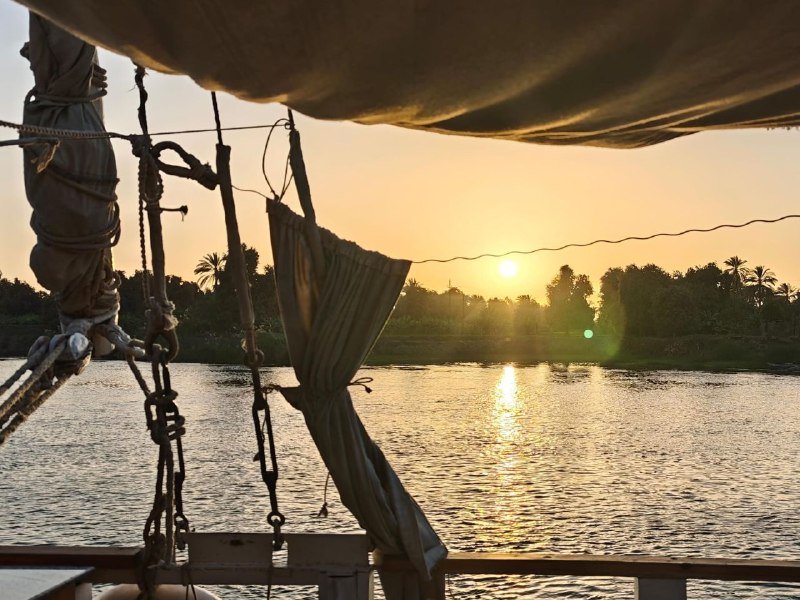
🌅 Quiet sunsets and nights on the water
👨‍🏫 Private English-speaking Egyptologist guide
✨ Small boutique dahabiya for just 8–12 guests
Easy arrival

Arrival and Pick-Up

You arrive independently. Our team picks you up directly from Luxor or Hurghada airport.

From Hurghada, the transfer to Luxor is by private air-conditioned vehicle. The drive takes about 3.5–4 hours (approx. 290 km), with a short break at a roadside rest stop.

Pick-up directly from the airport
Private air-conditioned transfer
Rest stop on the way included
Personal welcome by your guide
When booking, please give us your arrival flight number so your guide is there on time.

Itinerary: Nile Dahabiya Cruise from Luxor – 7 Days / 6 Nights

Day 1 – Arrival in Luxor – Boarding – First Evening

Arrival at Luxor or Hurghada airport (transfer approx. 4 hours). Then you board the dahabiya and meet the group and crew. Dinner made from fresh Egyptian produce follows.

Dinner | Overnight in Luxor

Day 2 – Luxor: Karnak Temple – Luxor Temple – Avenue of Sphinxes

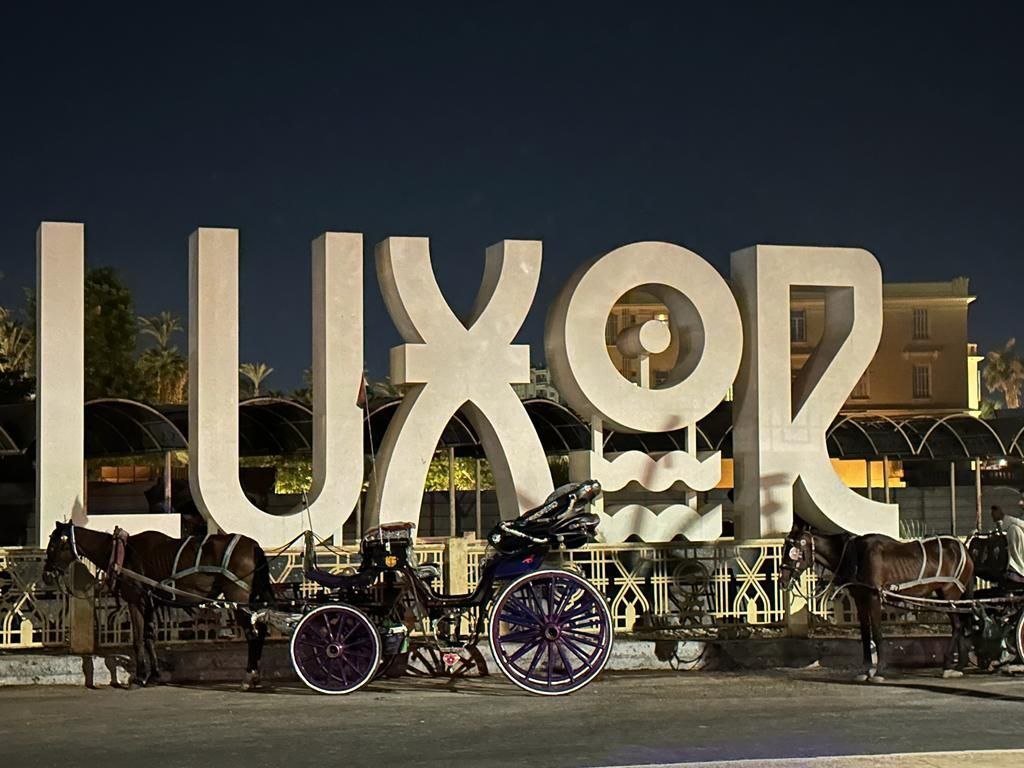
Early in the morning, before the large groups arrive, you explore Karnak with your private guide. In the afternoon, you visit Luxor Temple and the Avenue of Sphinxes, reopened in 2021. In the evening, the dahabiya sets sail.

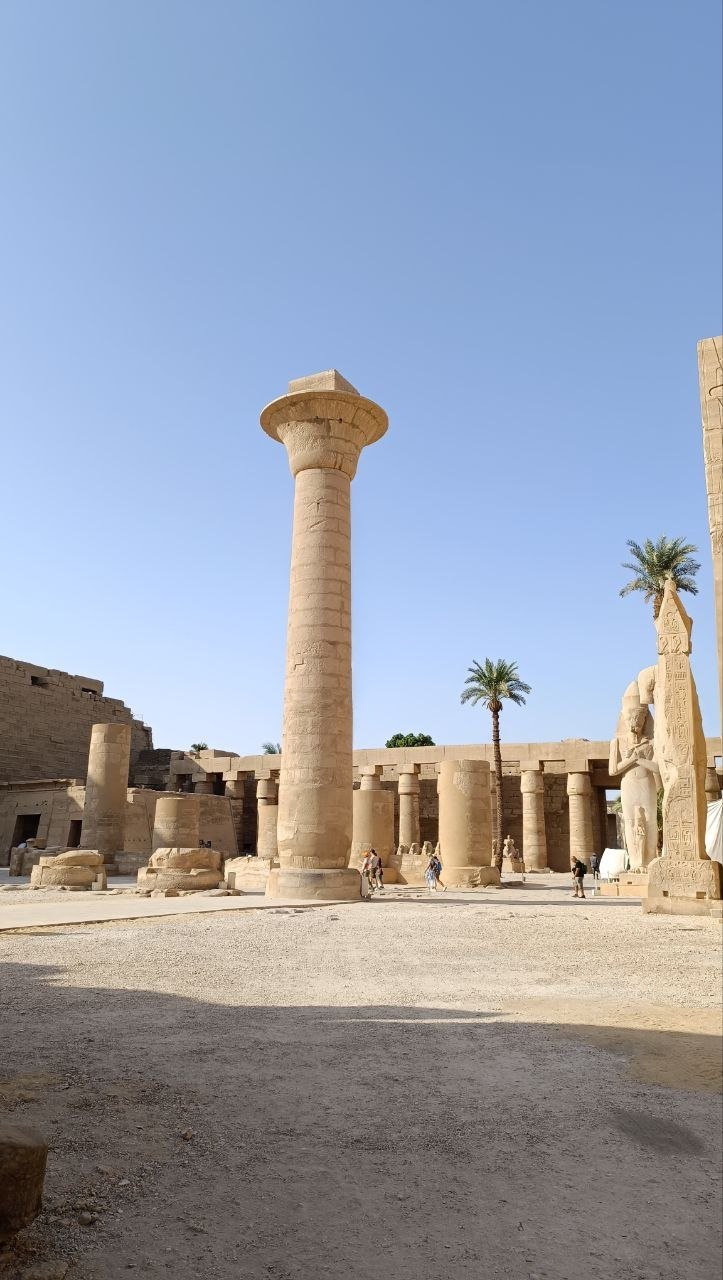
Karnak Temple

Karnak Temple is the largest religious complex of antiquity. For about 2,000 years, pharaohs of the Middle and New Kingdoms and the Late Period expanded this complex of around 100 hectares. At its heart is the Great Hypostyle Hall, with 134 huge papyrus columns up to 21 metres tall. Karnak was also the cult centre of the state god Amun-Ra and the seat of New Kingdom power.

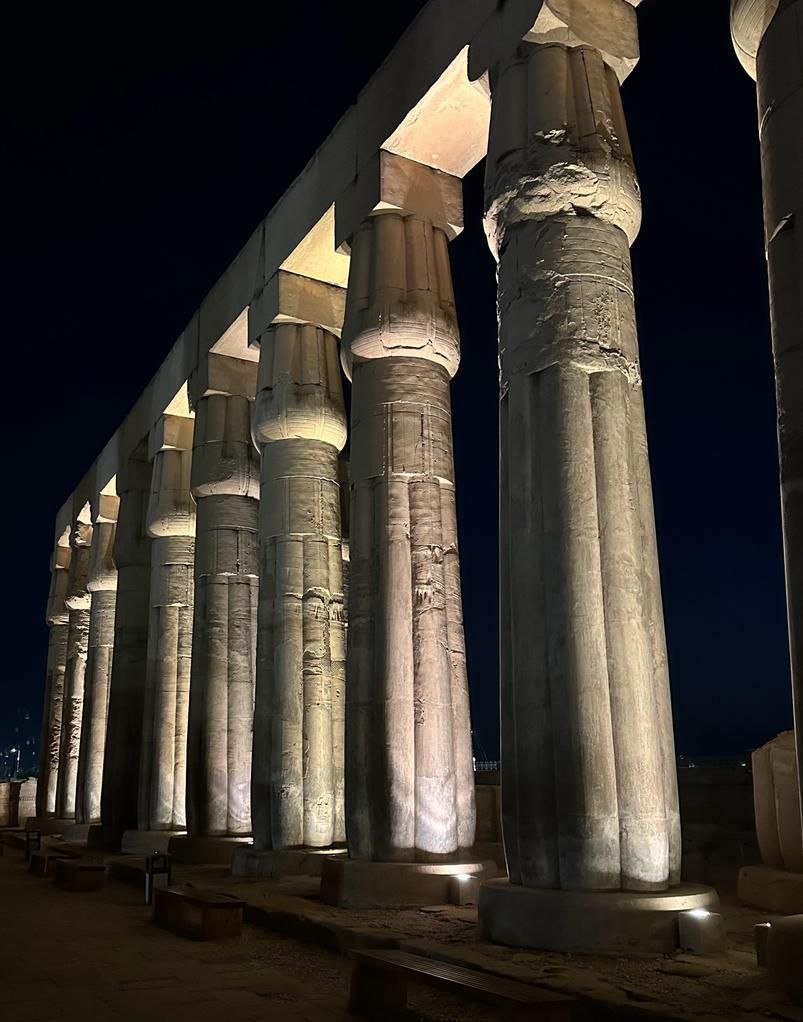
Luxor Temple

Luxor Temple was built mainly under Pharaoh Amenhotep III (c. 1390–1352 BC) and later expanded by Tutankhamun and Ramesses II. Ramesses II also had the impressive gateway (pylon) decorated with scenes of the Battle of Kadesh (1274 BC). The 2.7 km Avenue of Sphinxes leading to Karnak reopened in 2021 after decades of excavation and restoration.

Full board | Overnight on the Nile

Day 3 – Esna Lock – Temple of Khnum – El Kab

Passing through the historic Esna lock is quite a spectacle, as the dahabiya only just fits.

The Temple of Khnum at Esna

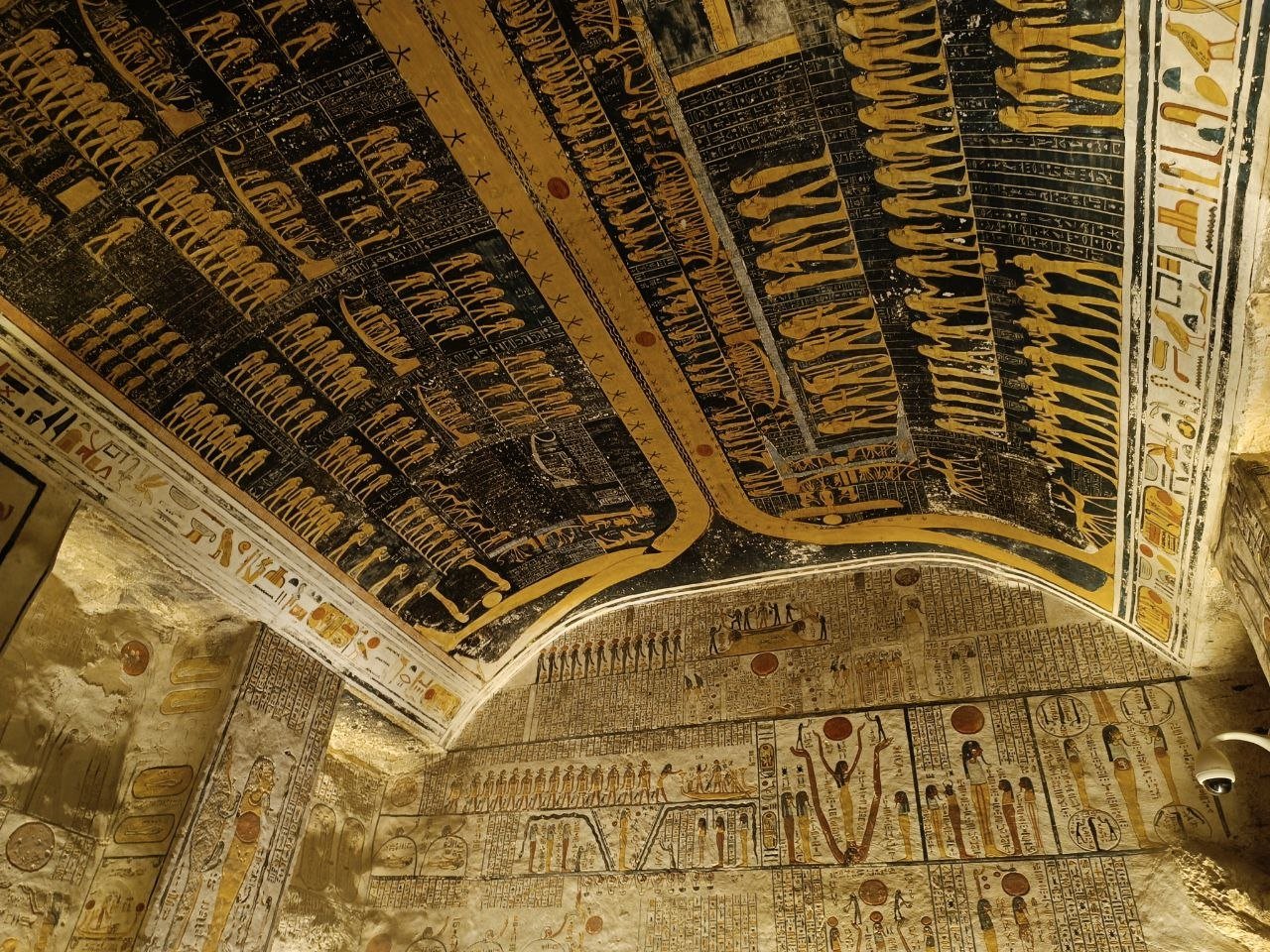
The temple at Esna is dedicated to the creator god Khnum and lies in the middle of the old town, about 6 metres below today’s street level. The visible parts date mainly from the Roman period (1st–3rd century AD). Its ceiling reliefs with astronomical scenes are among the most beautiful in Egypt.

El Kab

El Kab (ancient Nekheb) was an important city in early Egyptian history and the cult centre of the vulture goddess Nekhbet. Its rock tombs from the Middle and New Kingdoms (c. 2000–1300 BC) show scenes of daily life with remarkable precision. What’s more, El Kab is one of the least visited archaeological sites in Upper Egypt.

Full board | Night at anchor on the Nile

Day 4 – Edfu – Kom Ombo

Traditionally, you travel to the temple at Edfu by horse-drawn carriage from the Nile landing stage.

The Temple of Horus at Edfu

The Temple of Horus at Edfu is the best-preserved temple in Egypt. It was built between 237 and 57 BC in the Ptolemaic style, on the foundations of an older New Kingdom sanctuary. Its complete complex of pylons, hypostyle halls and black granite sanctuary shows better than anywhere else how an ancient Egyptian temple looked and worked.

The Double Temple of Kom Ombo

The temple at Kom Ombo is unique in Egyptian architecture, as it is divided symmetrically into two mirror-image halves. One is dedicated to the crocodile god Sobek, the other to the sky god Haroeris (a form of Horus). The building dates mainly from the Ptolemaic and Roman periods (c. 332 BC – AD 395). The neighbouring Crocodile Museum displays more than 50 mummified sacred crocodiles.

Full board | Night on the Nile

Day 5 – Aswan: Philae – High Dam – Unfinished Obelisk – Nubian Village

Arrival in Aswan, followed by a full day in Egypt’s southernmost major city.

Philae Temple (Temple of Isis)

Philae Temple stands on Agilkia Island in Lake Nasser. The oldest surviving parts date from the reign of Pharaoh Nectanebo I (c. 380 BC, 30th Dynasty), while the main temple was created by the Ptolemaic rulers. When the level of Lake Nasser rose after the High Dam was built, an international UNESCO campaign (1972–1980) saved the entire complex. It was moved stone by stone to neighbouring Agilkia Island.

The Aswan High Dam

The Aswan High Dam was built between 1960 and 1970 with Soviet support and officially opened on 15 January 1971. It controls the Nile’s annual floods, generates electricity and created Lake Nasser, about 500 km long and one of the largest reservoirs in the world. However, its construction required the resettlement of around 100,000 Nubians.

The Unfinished Obelisk

In the granite quarries north of Aswan lies an obelisk that was never completed. It is almost 42 metres long and weighs around 1,168 tonnes, so it would have been the heaviest stone monument the Egyptians ever moved. During carving, about 3,500 years ago, cracks appeared in the granite and the project was abandoned. Today, the obelisk is the best evidence of ancient Egyptian stoneworking techniques.

Nubian Village

The Nubians are the oldest people of the Nile, and their homeland stretches from Aswan to Sudan. After the High Dam was built, many villages were flooded and their inhabitants resettled. Today, Nubian communities live on the west bank near Aswan, in colourful houses, with hand-woven textiles, their own language and cuisine. That is why a visit by motorboat is one of the most authentic experiences of the whole Nile cruise.

Full board | Overnight in Aswan
Day 6 – Abu Simbel – Last Evening

Early departure at around 3:00 am by private vehicle (approx. 3 hours each way), returning to Aswan around midday. In the evening, a farewell dinner on the dahabiya under the Egyptian starry sky.

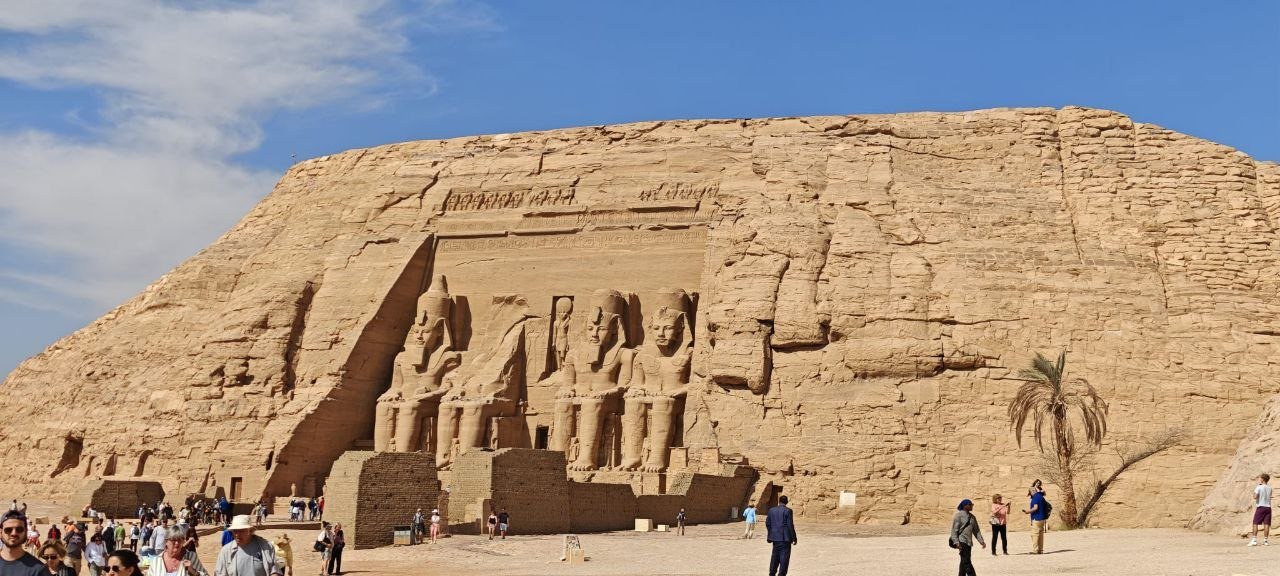
Abu Simbel – the Temples of Ramesses II and Nefertari

Ramesses II (reigned c. 1279–1213 BC) had both temples carved into the Nubian sandstone around 1264 BC. The Great Temple has four colossal statues, each about 20 m tall. Above all, it is a masterpiece of astronomy: on 22 February and 22 October, the morning light shines deep into the sanctuary and illuminates three of the four statues of the gods. Only Ptah, the god of darkness, stays in shadow. Between 1964 and 1968, fifty countries working for UNESCO dismantled both temples into more than 1,000 blocks and rebuilt them 65 metres higher. Since 1979, they have been listed as a UNESCO World Heritage Site.

Breakfast and dinner | Last night on the Nile

Day 7 – Disembarkation in Aswan

A final breakfast on board, then disembarkation and transfer to Aswan airport or, on request, back to Hurghada. This is how your 7 day Nile Dahabiya cruise from Luxor to Aswan comes to an end. Discover more Nile cruises.

Breakfast | Disembarkation before noon

Boutique dahabiya prices

Prices per Person

An exclusive Nile dahabiya cruise with a private Egyptologist, premium all inclusive and a small boutique group.

Number of travellers
Price per person
2 people
1100 EUR
3–4 people
1000 EUR
5–6 people
920 EUR
7–8 people
850 EUR
All prices are per person and include full board, transfers, a private guide and the Abu Simbel excursion.

Included in the Trip

  • 6 nights on the dahabiya (premium all inclusive)
  • Private Egyptologist guide – exclusively for your group
  • Abu Simbel excursion by private vehicle
  • Motorboat and felucca rides as per the itinerary
  • All entrance tickets as per the itinerary
  • All transfers
  • All taxes and service charges

Not Included

  • International flights
  • Entry visa (approx. 25 USD)
  • Tomb of Tutankhamun (special ticket)
  • Alcoholic drinks
  • Tips
  • Personal expenses

Payment

Payment is conveniently made in cash on pick-up (not available for pick-ups from Safaga port). We accept the following currencies:

💶Euro
💵US dollar
🇨🇭Swiss franc
🇪🇬Egyptian pound (EGP)
All taxes and insurance are already included in the price.

Login