This 5 day Nile cruise from Luxor to Aswan is a journey by ship through one of Egypt’s most fascinating regions. Over 4 nights on board, you admire the landscapes of the Nile Valley and discover the history of ancient Egyptian civilisation. Check the detailed itinerary, price, accommodation and booking information below.
Highlights of the 5 Day Nile Cruise from Luxor to Aswan
Karnak Temple – the largest religious building ever constructed
Luxor Temple – an evening walk through 3,300 years of history
The Valley of the Kings – burial chambers of the mightiest pharaohs
The mortuary temple of Hatshepsut – architecture that blends into the cliff
The Colossi of Memnon – two stone giants guarding the plain for 3,400 years
The Temple of Horus at Edfu – Egypt's best-preserved temple
The double temple of Kom Ombo – dedicated to the crocodile god Sobek and the falcon god Haroeris
The Temple of Isis at Philae – saved from the waters of Lake Nasser
The Unfinished Obelisk – stonemasons' secrets in Aswan's granite quarries
The Aswan High Dam – the engineering feat that secured Egypt's future
Abu Simbel – Ramesses II carved in rock, saved by UNESCO
Nile Cruise 5 Days / 4 Nights – Key Information
Trip duration
5 days / 4 nights
Trip type
Tailor-made and private
Availability
Departures possible daily
Day-by-Day Itinerary: Nile Cruise from Luxor to Aswan
Day 1 – Luxor: Karnak, Luxor Temple and Boarding
First, your English-speaking Egyptologist guide picks you up from your accommodation. The first day is devoted to Luxor’s East Bank and one of the most impressive religious complexes in the world.
Karnak Temple
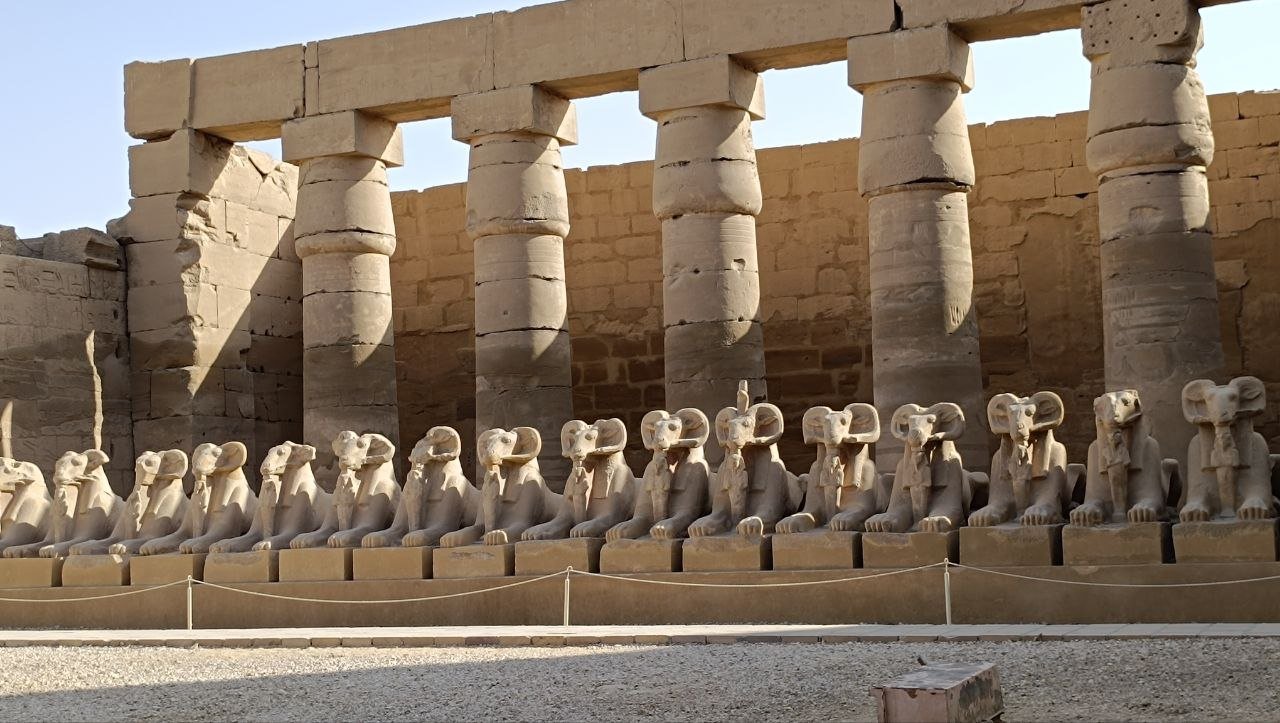
Few places on Earth convey divine power as strongly as Karnak. For more than 2,000 years, successive pharaohs expanded this temple complex, which covers about 100 hectares. Impressive pylons, slender obelisks and the famous hypostyle hall with its 134 huge papyrus columns leave a lasting impression. Karnak was the religious heart of the New Kingdom and the cult centre of the Theban triad: Amun, Mut and Khonsu. As you walk along the Avenue of Ram-Headed Sphinxes, you will understand why the ancient Egyptians felt especially close to the gods here.
Lunch follows at a local restaurant in Luxor.
Luxor Temple
In the heart of modern Luxor, Luxor Temple rises like a sandstone dream. It was built mainly under Pharaoh Amenhotep III (c. 1390–1352 BC). Tutankhamun and Ay continued the work, and Ramesses II finally expanded it, adding an impressive pylon with scenes of his military campaigns, including the famous Battle of Kadesh. In the evening, when the temple is illuminated, it has a truly magical atmosphere.
Boarding:dinner and your first night aboard a 5* Nile cruise ship – welcome to the Nile!
Day 2 – Luxor West Bank: Valley of the Kings, Hatshepsut and the Colossi of Memnon
After breakfast, you cross the Nile to the West Bank, the realm of the dead that the ancient Egyptians carefully separated from the world of the living.
The Valley of the Kings
Behind the limestone cliffs of the Theban hills lies the Valley of the Kings. For more than five centuries, from the 16th to the 11th century BC, New Kingdom pharaohs were buried here in beautifully painted tombs. The burial chambers of Tutankhamun, Ramesses III and Seti I tell the story of the journey to the afterlife in colourful frescoes. Every visit brings a new discovery: sometimes a ceiling painting looks as if it were finished yesterday, sometimes an inscription fires the imagination.
The Colossi of Memnon
Two stone giants from the 14th century BC stand alone on the plain, rising almost 18 metres. They are all that remains of the largest temple complex on the West Bank, built by Amenhotep III. In the past, they also made mysterious sounds at dawn, which attracted travellers from all over the world.
The Mortuary Temple of Hatshepsut (Deir el-Bahari)
This temple was built by the most powerful female pharaoh of Egypt. It rises on three terraces above the desert plain and blends into the steep limestone cliffs, an architectural marvel of the 15th century BC. Hatshepsut ruled Egypt for more than 20 years and sent expeditions as far as distant Punt (probably today’s Eritrea or Somalia), recorded in detail on the temple walls.
Dinner and your second night on board.
Day 3 – Sailing South: Edfu and Kom Ombo
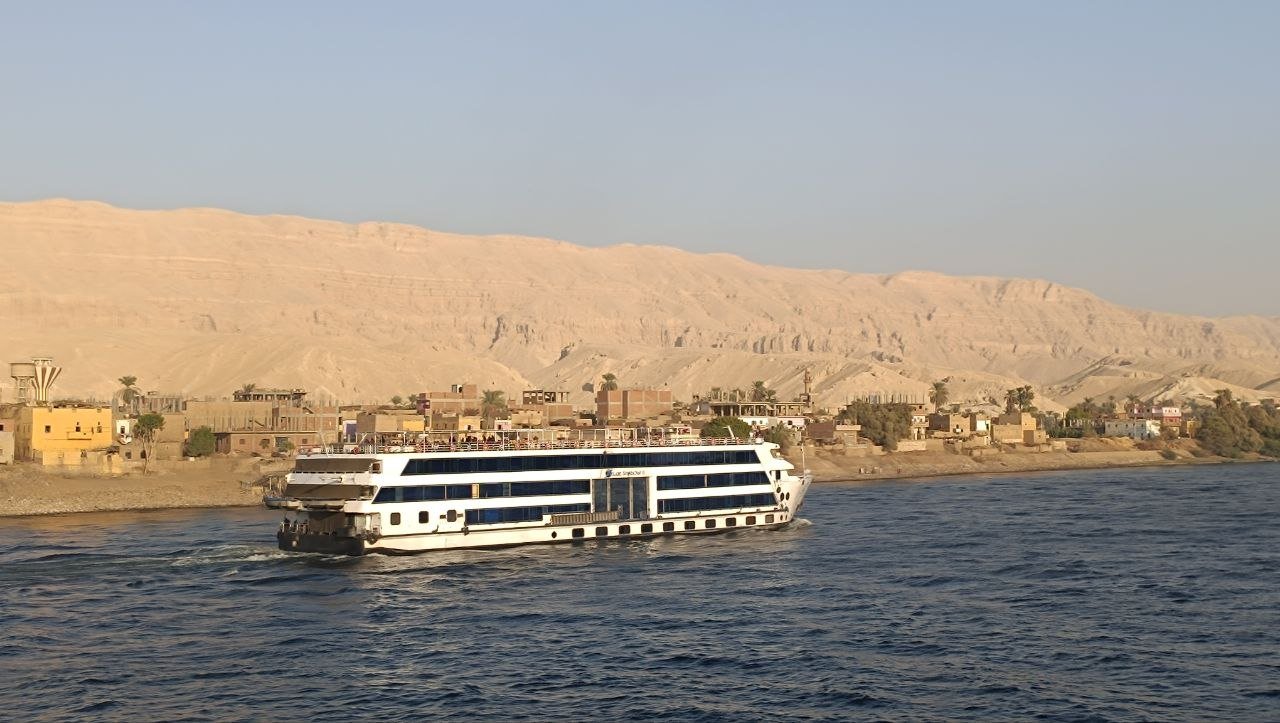
Next, you sail south along the Nile, past green fields, majestic palms and small riverside villages where life seems to have stood still for centuries.
The Temple of Horus at Edfu
The Temple of Horus at Edfu is simply the best-preserved temple in Egypt, even though it lay buried in sand for millennia. Built between 237 and 57 BC in the Ptolemaic style, it still has its complete depictions of the gods. At the entrance, an impressive granite statue of the falcon god Horus greets you. The building is also a perfect example of ancient Egyptian architecture, with pylons, courtyards, a hypostyle hall and a sanctuary, largely original.
The Double Temple of Kom Ombo
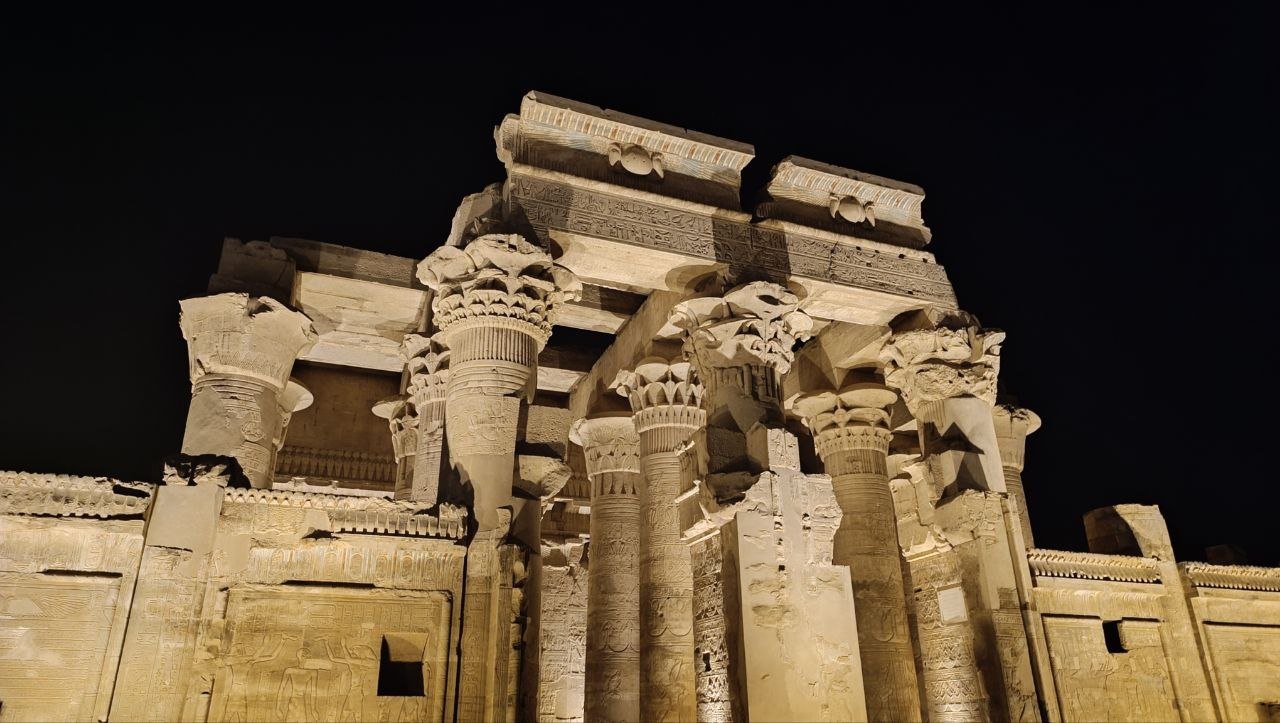
The temple at Kom Ombo is unique in Egypt, as it is divided into two parts and dedicated to the crocodile god Sobek and the sky god Haroeris. It dates mainly from the Ptolemaic and Roman periods (c. 332 BC – AD 395) and stands in a beautiful spot on the Nile. In the neighbouring Crocodile Museum, you also see mummies of these once-sacred animals.
Then you have dinner on board and spend your third night there as the ship sails on to Aswan.
Day 4 – Aswan: Philae Temple, the High Dam and the Unfinished Obelisk
Aswan, the southernmost city of the cruise, welcomes you with its unique charm. The river is wider here, its current calmer and dotted with small rocky islands. The air is also drier and the light more intense.
Philae Temple (Temple of Isis)
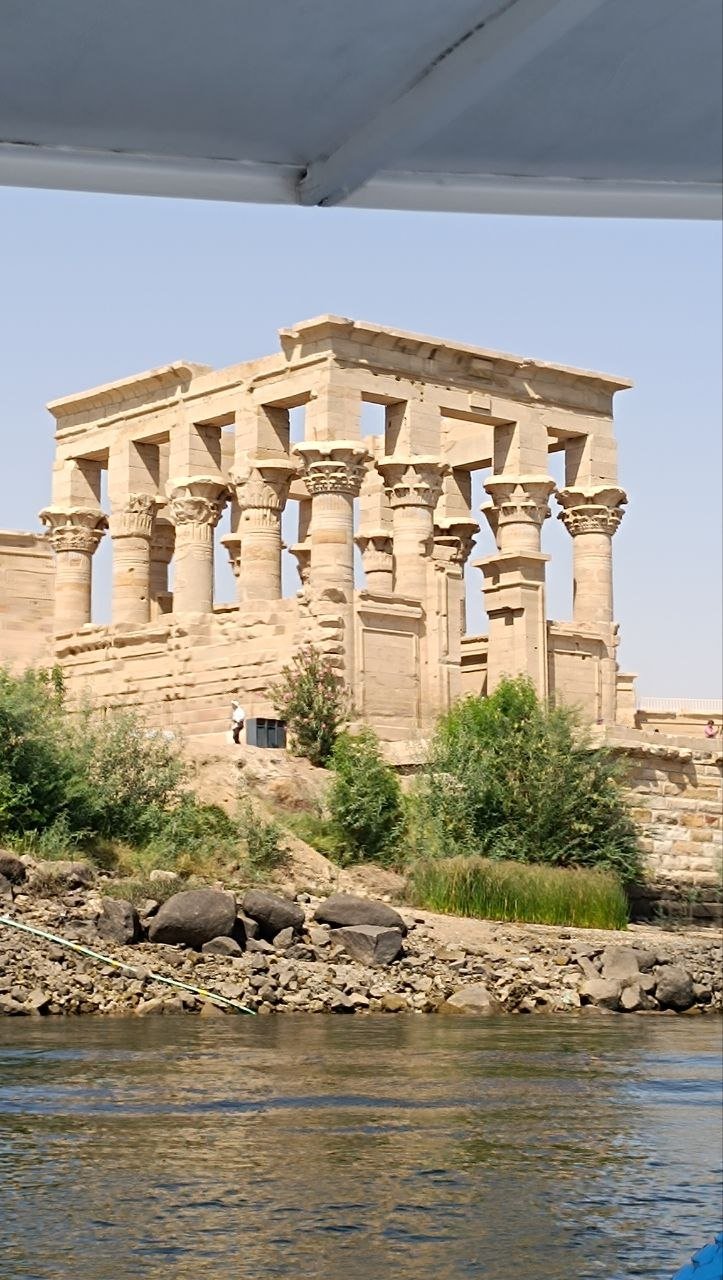
On a small island in the middle of the Nile stands one of Egypt’s most romantic temples. The oldest buildings date from the reign of Pharaoh Nectanebo I, around 380 BC, of the 30th Dynasty. Ptolemaic rulers then shaped the main temple over generations. When the rising waters of Lake Nasser threatened it after the dam was built, an international UNESCO campaign saved the entire complex. It was moved stone by stone to neighbouring Agilkia Island, one of the largest monument rescue operations in history. Today, you reach the temple by motorboat.
The Aswan High Dam
Built between 1960 and 1970 and opened on 15 January 1971, the dam regulates the Nile’s annual floods and supplies the country with electricity. It also created Lake Nasser, one of the largest artificial reservoirs in the world at more than 500 kilometres long.
The Unfinished Obelisk
In the ancient granite quarries north of Aswan, the largest obelisk ever begun has lain for about 3,500 years. It is almost 42 metres long and weighs around 1,168 tonnes, so it would have been the heaviest stone object ever moved by humans. During carving, however, the stonemasons found cracks in the granite and abandoned the project. Today, the obelisk explains how the Egyptians worked stone better than any textbook.
Dinner and your fourth night on board.
Day 5 – Abu Simbel and Departure
Your Egyptologist accompanies you from dawn, at around 3:00 am, in a private air-conditioned vehicle. The drive of about three hours across the Nubian Desert is a special experience in itself.
Abu Simbel – the Temples of Ramesses II and Nefertari
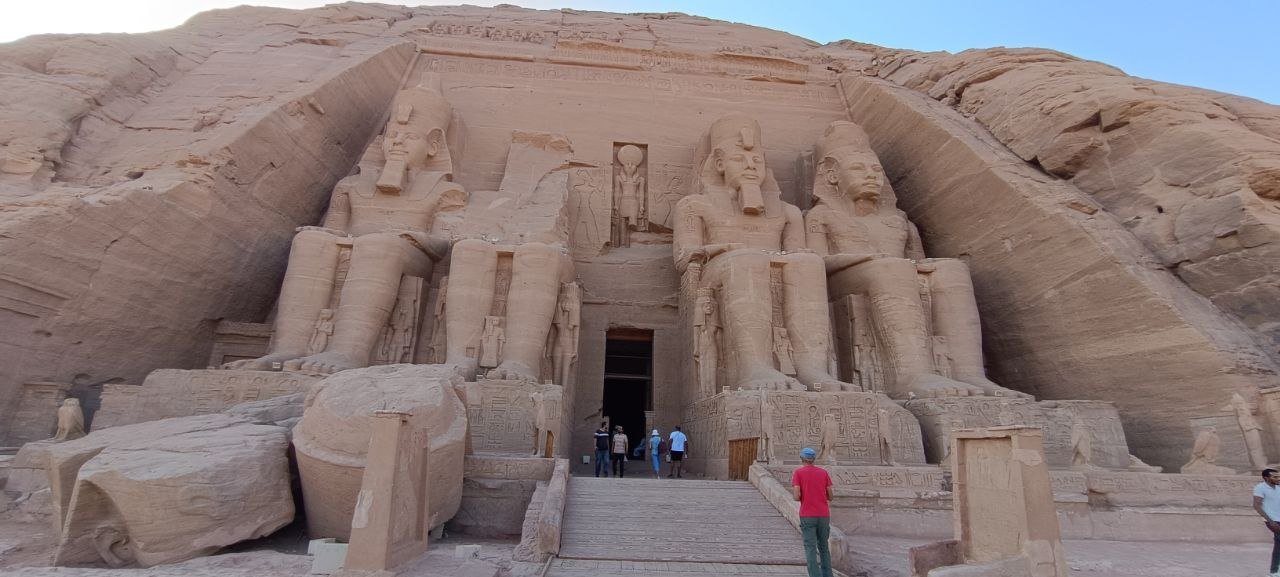
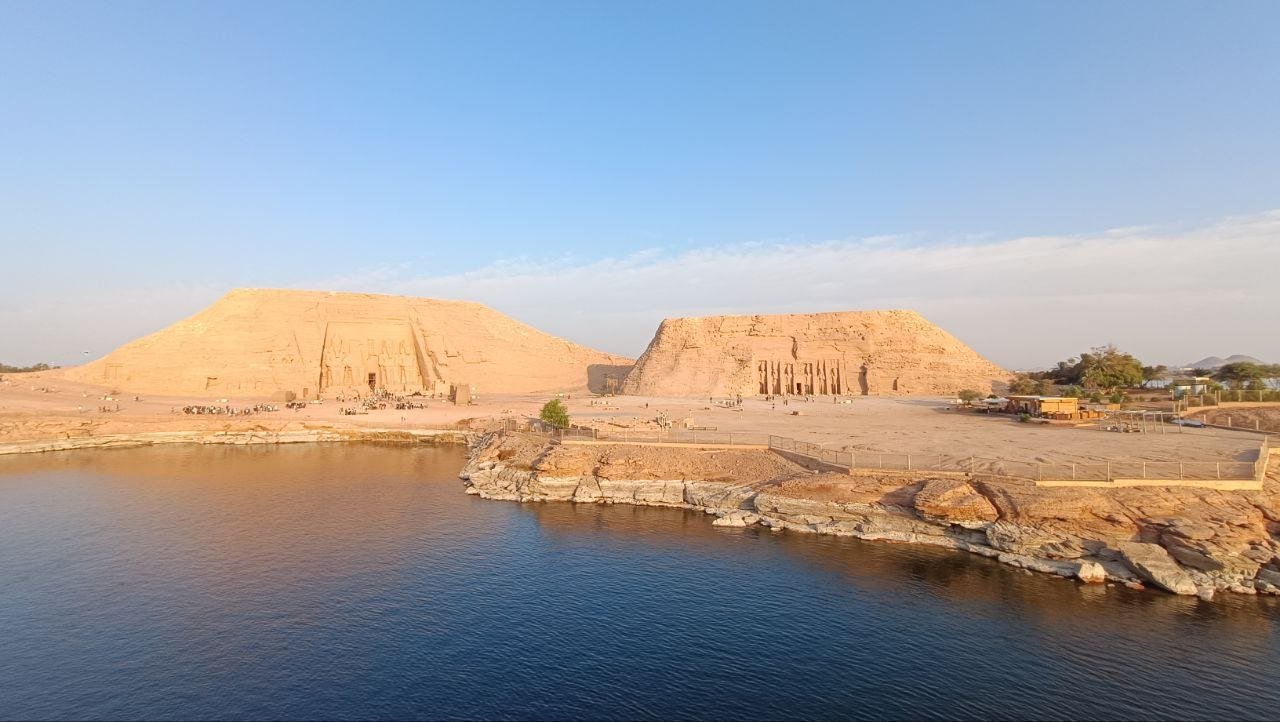
When Ramesses II (reigned c. 1279–1213 BC) had these two rock temples carved into the sandstone, his message knew no bounds. The façade of the Great Temple features four colossal seated statues, each over 20 metres tall. The temple is dedicated to Amun-Ra, Ra-Horakhty, Ptah and the deified pharaoh himself. Above all, on 22 February and 22 October, the first rays of the sun shine deep into the temple and illuminate the statues of the gods in the sanctuary.
The neighbouring Small Temple is dedicated to Queen Nefertari and the goddess Hathor. What’s more, it depicts the queen on a scale comparable to the pharaoh, which was very rare in Egyptian art. Between 1964 and 1968, both temples were dismantled into more than 1,000 blocks and rebuilt 65 metres higher. UNESCO considered it the largest cultural heritage rescue operation in the world.
Finally, you return to Aswan, disembark and bid a fond farewell to your 5 day Nile cruise from Luxor to Aswan. Discover more Nile cruises.