
Things to Do in Aswan, Egypt: Top Attractions and Places to See
Upper Egypt · Gateway to Nubia · Nile islands · UNESCO monuments · The Aswan High Dam and the desert
Some places you simply visit; others stay with you for a long time. Aswan definitely belongs to the second group. In southern Egypt, where the Nile flows between pink granite rocks, Nubian houses glow with colour and the desert begins just beyond the last palm groves, travel takes on a different rhythm – slower, calmer and closer to local life. In this guide, Sharara Tours shares the best things to do in Aswan, from Philae Temple and Abu Simbel to felucca sailing and Nubian villages.
Philae Temple – the pearl of the Nile and sanctuary of Isis
Philae Temple is one of the most fascinating monuments in Aswan. Set on Agilkia Island and reached by boat, the sanctuary – dedicated mainly to the goddess Isis – seems to rise straight out of the Nile. Its monumental pylons, courtyards, columns and reliefs make it one of the most visited religious complexes in the region.
Its modern history is just as remarkable. Threatened by rising water levels after the Aswan dams were built, the complex was dismantled and rebuilt stone by stone on higher ground. This was part of the international campaign to save the monuments of Nubia, coordinated by UNESCO.
In the evening, the temple takes on a completely different character during the sound and light show. Columns, reliefs and towering pylons emerge from the darkness as the story of the sanctuary unfolds. It is a unique way to experience Philae after a daytime visit.
Boats to the temple leave from the landing area near Shellal. For soft light and a calmer atmosphere, plan your visit for the early morning.
Abu Simbel – the colossal temples of Ramesses II
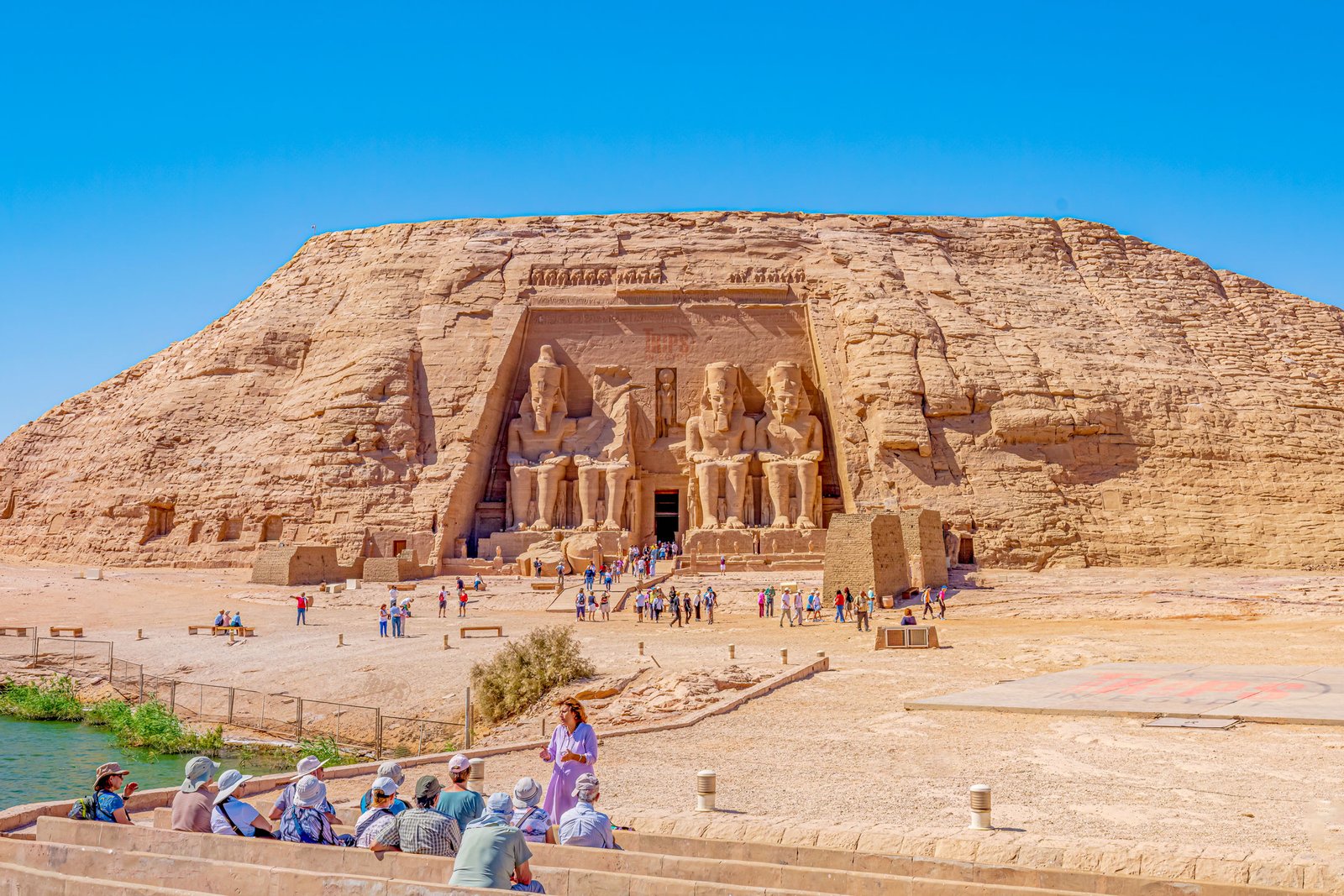
Around 280 kilometres south of Aswan, on the shores of Lake Nasser, stand the two extraordinary temples of Abu Simbel – a sight you will never forget. You can reach them by road, by plane or on selected Lake Nasser cruises. Ramesses II had the temples carved out of solid rock. Four gigantic seated statues of the pharaoh, each about 20 metres high, guard the entrance to the Great Temple. Behind the monumental façade lie chambers filled with reliefs, images of the gods and battle scenes.
One of Abu Simbel's most famous phenomena is the Sun Festival, when sunlight illuminates the inner sanctuary. Twice a year, around 22 February and 22 October, the rays of the rising sun travel deep into the temple and light up the statues of Ramesses, Amun and Ra in the innermost chamber. Only Ptah, a god also linked to the underworld, remains in shadow. This alignment shows the remarkable astronomical knowledge and architectural skill of the ancient Egyptians more than 3,200 years ago.
Next to the Great Temple is a smaller sanctuary dedicated to Queen Nefertari and the goddess Hathor. Its monumental façade reflects the exceptional place Nefertari held in Ramesses II's building programme.
In the 1960s, the Abu Simbel temples were cut into huge blocks and reassembled on higher ground to protect them from the rising waters of Lake Nasser. It remains one of the most famous archaeological rescue operations of the 20th century.
The Nile in Aswan – one of Egypt's most beautiful landscapes
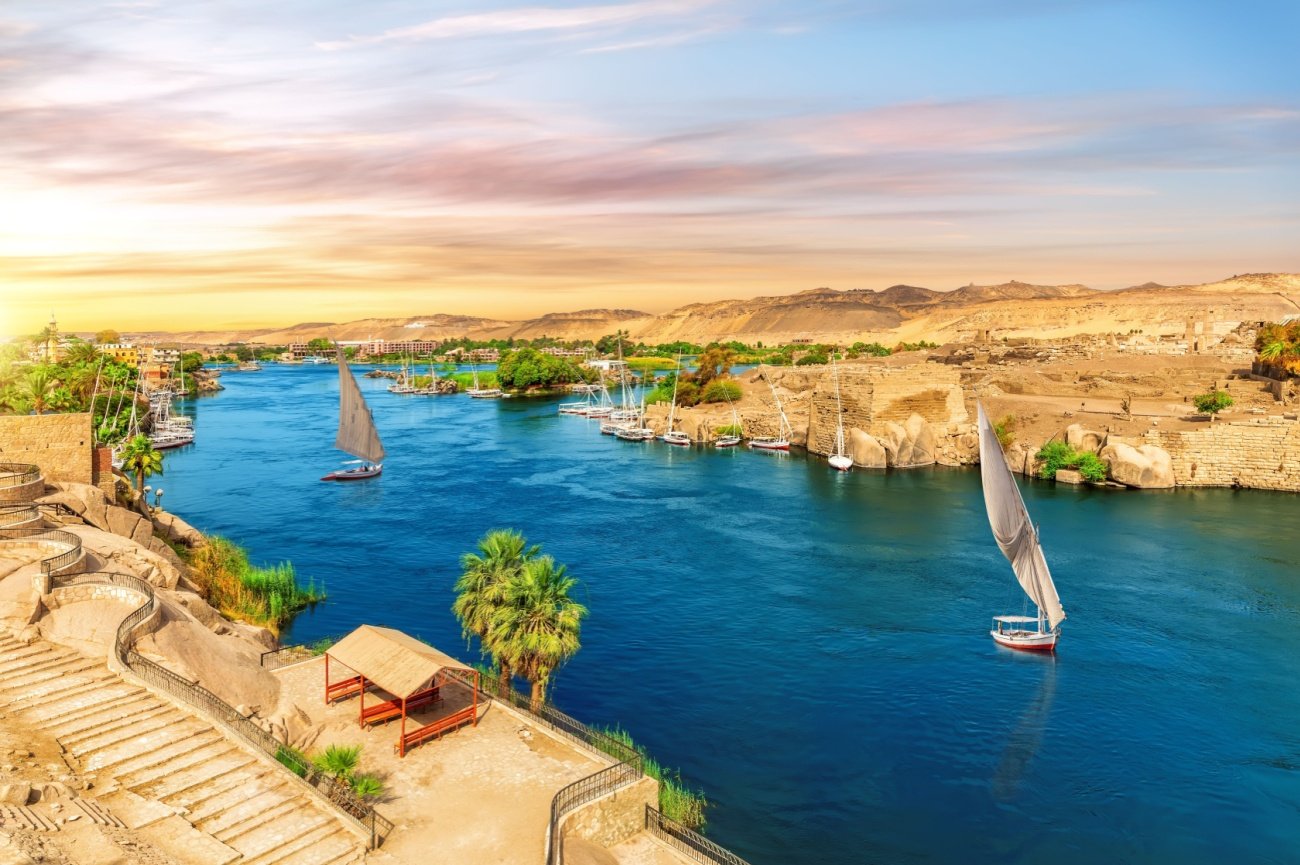
In Aswan, the Nile looks very different from Cairo or Luxor. The river widens between granite islands, palm trees and sandy banks. Elephantine Island, inhabited since ancient times, preserves archaeological sites and Nubian villages. Meanwhile, Kitchener's Island forms a green oasis in the middle of the river. Its botanical garden, developed from plant collections brought here from the late 19th century, offers pleasant shady paths among many tropical and subtropical species.
A felucca ride on the Nile in Aswan, especially in the late afternoon, is one of the region's most iconic experiences. The gentle pace of the traditional sailing boat, the river islands and the light of the setting sun create a wonderfully peaceful atmosphere.
The Aswan High Dam – history, engineering and impact
The Aswan High Dam, known in Arabic as As-Sadd al-Ali, is one of Egypt's most important 20th-century engineering projects. It is about 3.6 km long and 111 metres high. Completed in the early 1970s with significant Soviet involvement, it completely changed how the waters of the Nile are managed, as well as hydroelectric power production and irrigation.
However, its construction had serious social and cultural consequences. It led to the resettlement of Nubian communities and threatened many ancient monuments with flooding. Thanks to an international rescue campaign, several of the most important temples, including Philae and Abu Simbel, were relocated. A visit to the dam therefore reveals both Aswan's modern history and the changes that transformed Nubia.
Lake Nasser – a vast lake in the middle of the desert
Lake Nasser is a huge man-made reservoir stretching for hundreds of kilometres south of Aswan into Sudan. Its landscapes combine desert, water and endless horizons, and it sees far fewer visitors than the classic routes along the Nile.
A Lake Nasser cruise between Aswan and Abu Simbel reveals another side of southern Egypt, away from the busiest tourist trails. Some routes also include monuments that were relocated during the Nubian rescue campaign.
Lake Nasser is also well known to anglers, mainly for its Nile perch. Specialist fishing trips are organised in selected parts of the lake.
Nubian villages in Aswan – the colourful heart of southern Egypt
Exploring Aswan without discovering Nubian culture would mean missing a key part of the region's identity. Nubian communities have their own languages, including Nobiin and Kenzi, as well as deep-rooted traditions in music, crafts and architecture. Houses painted in bright colours and decorated with geometric patterns, animals and traditional symbols have become one of the most recognisable images of southern Egypt.
A visit to a Nubian village in Aswan, on Elephantine Island or near Sehel, introduces a local culture that goes beyond the pharaonic monuments. Above all, these villages remain places of everyday life. The modern history of the Nubian people has also been shaped by resettlement linked to the creation of Lake Nasser, and the memory of these events remains an important part of Nubian identity today.
Hospitality plays a central role in local culture. A respectful visit, ideally with a guide who knows the region, lets you discover Nubian life far better than a brief tourist stop.
Aswan – a relaxed city that lives to the rhythm of the Nile
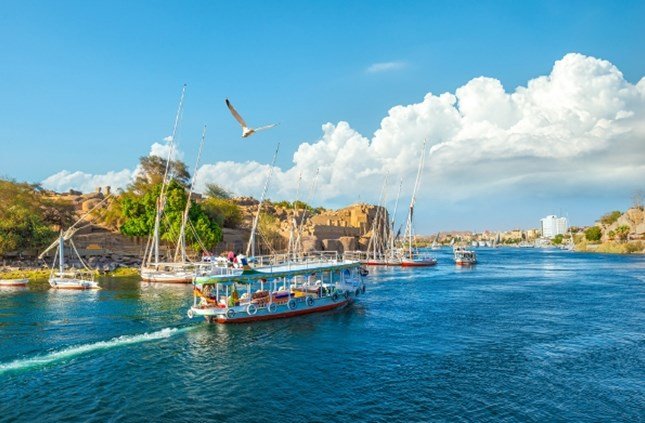
Aswan is smaller and usually calmer than Cairo or Luxor – and that is exactly its charm. The riverside promenade, known as the Corniche, is lined with cafés, boats and viewpoints over the nearby islands. At sunset it comes to life, yet it keeps a more relaxed atmosphere than Egypt's big cities. It is also one of the best moments for a gentle stroll along the Nile.
The Aswan bazaar is famous for spices, dried hibiscus, textiles, woven baskets and local handicrafts. It is a great place to discover products typical of Upper Egypt and Nubia and to watch everyday local life.
Aswan between the Nile, Nubia and the desert
Aswan is a predominantly Muslim city where local and Nubian traditions play an important role in daily life. Mosques, religious festivals and family customs are part of the city's cultural landscape. During Ramadan in particular, family evenings, illuminated mosques and shared meals to break the daily fast give the city a special atmosphere.
At the same time, the region's ancient temples recall the worship of Isis, Khnum, Horus and other gods linked to the Nile and to Egypt's southern frontier. These overlapping eras give Aswan a unique historical depth.
Granite, desert and the waters of the Nile
Aswan sits in a landscape dominated by granite. Black and pink boulders rise from the Nile between the feluccas, giving the river its distinctive look. Just a few kilometres from the city, desert scenery begins, with dunes, villages and wide panoramas across the west bank.
The Unfinished Obelisk in Aswan, still attached to the granite bedrock in the ancient quarries, shows how the ancient Egyptians worked stone. Had it been completed, it would have been one of the largest obelisks ever made in antiquity.
Where to stay in Aswan: hotels with Nile views
The most famous of Aswan's hotels is the legendary Old Cataract, opened in 1899 on a granite outcrop above the Nile. Its history is linked to many travellers and celebrities, including Agatha Christie. The hotel terrace is still renowned for its views over the river and the west bank.
Along the Corniche you will find hotels in various categories, many offering rooms with Nile views. If you prefer a more local experience, choose a Nubian guesthouse on Elephantine Island. These family-run places often offer simple rooms, terraces and direct access to the river.
Another option is to stay on one of the cruise ships sailing between Luxor and Aswan. They combine transport, meals, nights on board and guided visits to the temples along the Nile. Browse our Nile cruises, such as the 4-day Nile cruise from Aswan to Luxor.
Aswan travel tips
How many days? Two to three days in Aswan let you see Philae Temple, the High Dam, the Unfinished Obelisk, a Nubian village and enjoy a felucca ride, with an extra early-morning day trip to Abu Simbel.
When to go: October to March is the most comfortable period. Summer temperatures in Aswan are among the highest in Egypt, so plan sightseeing for the early morning and late afternoon.
Getting around: Many sights are on islands or across the river, so boats are part of everyday travel. Exploring with a professional English-speaking Egyptologist guide saves time and brings the history of each temple to life.
Aswan – the calm and colourful side of Egypt
Aswan reveals a calmer and more colourful side of Egypt. The Nile islands, Nubian villages, Philae Temple and trips to Abu Simbel combine extraordinary heritage, beautiful scenery and encounters with local culture. Aswan lies south of the busiest Nile Valley routes, but it definitely deserves a few days. It is the perfect complement to an itinerary covering Cairo and Luxor – see our Egypt tour packages and Luxor tours for ideas.
Things to do in Aswan – frequently asked questions
What is Aswan best known for?
Aswan is best known for Philae Temple, the nearby Abu Simbel temples, the Aswan High Dam, Lake Nasser, felucca rides among granite islands and its colourful Nubian culture.
How many days do you need in Aswan?
Two to three days is ideal. This gives you time for Philae, the High Dam, the Unfinished Obelisk, a Nubian village and a sunset felucca ride, plus a day trip to Abu Simbel.
How far is Abu Simbel from Aswan?
Abu Simbel is about 280 km south of Aswan. You can get there by road, by plane or on selected Lake Nasser cruises.
When is the Abu Simbel Sun Festival?
The sunlight reaches the inner sanctuary twice a year, around 22 February and 22 October.
When is the best time to visit Aswan?
October to March offers the most pleasant temperatures. Summer is very hot, so sightseeing is best done early in the morning.
Discover Aswan with Sharara Tours
From Philae Temple to Abu Simbel and Nile cruises, we organise private tours with a professional English-speaking Egyptologist guide. Tell us your dates and we will plan the perfect trip to southern Egypt.
Book now Send a request