
Saqqara Pyramids, Egypt: The Step Pyramid of Djoser and Ancient Wonders
A complete guide to the pyramids, tombs and top attractions of Saqqara
Saqqara – one of Egypt's greatest archaeological treasures
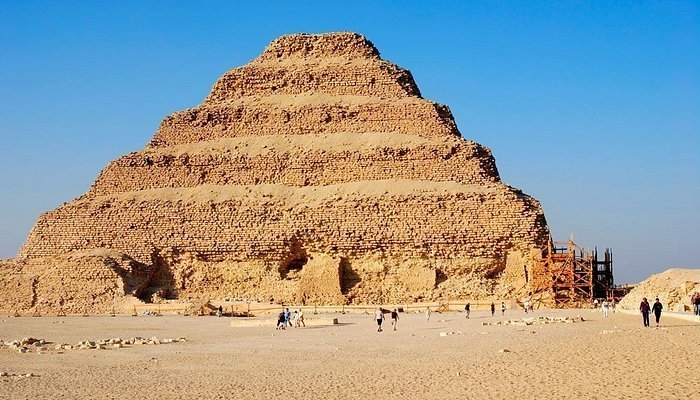
The Saqqara pyramids tell the story of how the ancient Egyptians learned to build in stone – long before the Great Pyramid of Giza. In this guide, the team at Sharara Tours walks you through the Step Pyramid of Djoser, the pyramids with the oldest Pyramid Texts, the finest Old Kingdom mastabas, the Serapeum and practical tips for your visit.
Saqqara – pyramids, tombs and must-see monuments
What is Saqqara in Egypt?
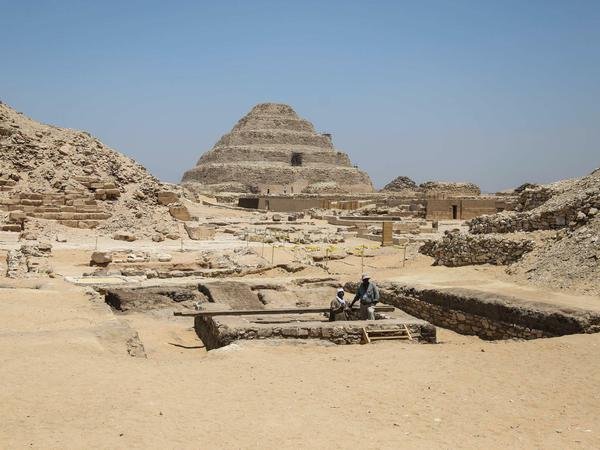
Saqqara is one of the most important archaeological sites in Egypt. Located about 30 kilometres south of Cairo, close to the ancient capital of Memphis, this vast necropolis stretches for several kilometres. Its monuments span more than 3,000 years of Egyptian history – from the first pharaonic dynasties to the Coptic period.
Saqqara is part of the UNESCO World Heritage Site "Memphis and its Necropolis – the Pyramid Fields from Giza to Dahshur". For anyone fascinated by ancient Egypt, a visit to Saqqara is a unique chance to understand how funerary architecture developed before the great pyramids of Giza were built.
Why visit the Saqqara pyramids?
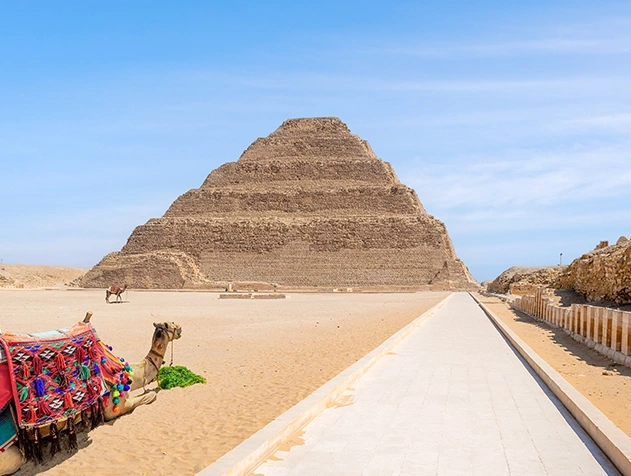
Saqqara offers an extraordinary archaeological experience. Its most iconic monument is the Step Pyramid of Djoser, regarded as one of the first large monumental complexes built of cut stone.
The necropolis also includes richly decorated mastabas, underground catacombs, tombs of high officials and the Imhotep Museum. Saqqara is often less crowded than the Giza Plateau, so you can explore different periods of pharaonic history at a more relaxed pace. Excavations continue to this day, and archaeologists regularly announce new discoveries.
Where is Saqqara and how do you get there from Cairo?
The Saqqara archaeological site lies in Giza Governorate, on the west bank of the Nile, about 30 km south of Cairo near Badrashin.
From Cairo, you can reach Saqqara by private car, taxi or on an organised tour. Depending on traffic, the journey usually takes around 45–60 minutes.
A visit to Saqqara is easy to combine with Memphis and Dahshur. In a single day trip, you can see the key stages in the evolution of the Egyptian pyramid – for example on our Saqqara, Memphis and Dahshur day tour from Cairo or the Giza Pyramids, Saqqara and Dahshur day tour.
The most important Saqqara pyramids – a guide to the monuments
Saqqara is home to many pyramids from different dynasties of the Old Kingdom and later periods. Together, they let you trace the development of Egyptian pyramid architecture – from the first monumental experiments to the burial complexes of later dynasties.
1. The Step Pyramid of Djoser (c. 2650 BC)
Pharaoh and dynasty: Djoser, 3rd Dynasty. Designed under the direction of Imhotep, the Step Pyramid of Djoser marks a turning point in the history of monumental stone architecture. It is the great forerunner of Egypt's smooth-sided pyramids.
The Step Pyramid is about 62 metres high and consists of six stacked tiers. Its vast funerary complex includes temples, ceremonial courtyards and monumental passageways.
After lengthy restoration work, the interior of the pyramid reopened to visitors in 2020. It remains the most important monument at Saqqara.
2. The Pyramid of Unas (c. 2375 BC)
Pharaoh and dynasty: Unas, the last ruler of the 5th Dynasty. Although the pyramid looks modest from the outside, it is famous for the Pyramid Texts inscribed on the walls of its inner chambers. They are among the oldest substantial collections of religious texts from ancient Egypt.
Hieroglyphic inscriptions cover the chamber walls and were meant to accompany the king into the afterlife. The complex also includes a mortuary temple and a long causeway, once decorated, linking the different parts of the royal complex.
3. The Pyramid of Teti (c. 2345 BC)
Pharaoh and dynasty: Teti, founder of the 6th Dynasty. The interior of the pyramid preserves Pyramid Texts and is one of the most important monuments of the necropolis.
From the outside, the pyramid is heavily ruined today. However, its inner chambers have kept exceptional features, including a sarcophagus and star-decorated ceilings. Mastabas of high-ranking 6th Dynasty officials lie nearby.
4. The Pyramid of Userkaf (c. 2498 BC)
Pharaoh and dynasty: Userkaf, founder of the 5th Dynasty. His pyramid stands right next to the Djoser complex and is one of the dynasty's first great royal monuments at Saqqara.
The monument is badly ruined today. Even so, important remains and sculptures were found in its funerary complex, helping us understand royal art of the 5th Dynasty.
5. The Pyramid of Djedkare Isesi (c. 2414 BC)
Pharaoh and dynasty: Djedkare Isesi, a ruler of the 5th Dynasty. His pyramid stands in southern Saqqara and is known locally as Haram el-Shawaf.
Although the pyramid is now badly damaged, its inner chambers and funerary complex remain highly significant for archaeologists. Monuments associated with members of the royal family stand nearby.
6. The Pyramid of Pepi I (c. 2332 BC)
Pharaoh and dynasty: Pepi I, 6th Dynasty. His funerary complex, called Men-nefer-Pepi, is traditionally linked to the origin of the Greek name Memphis.
Important Pyramid Texts survive inside. Several queens' pyramids and burial areas have been discovered around the royal complex, making this part of Saqqara a significant area of archaeological research.
7. The Pyramid of Merenre I (c. 2283 BC)
Pharaoh and dynasty: Merenre I, 6th Dynasty. His pyramid lies close to the complex of Pepi I and is now largely in ruins.
The monument is known, among other things, for the 19th-century discovery of a mummy once attributed to this king. Fragments of Pyramid Texts were also found in the burial chambers.
8. The Pyramid of Pepi II (c. 2278 BC)
Pharaoh and dynasty: Pepi II, 6th Dynasty. His reign was exceptionally long, and his funerary complex is one of the key monuments of the late Old Kingdom.
The complex includes the royal pyramid and pyramids associated with several queens, including Neith, Iput II and Wedjebten. The funerary texts preserved inside are an important source on the royal religious beliefs of the period.
9. The Pyramid of Ibi (c. 2160 BC)
Pharaoh and dynasty: Ibi, 8th Dynasty. This small pyramid dates from the intermediate period that followed the collapse of the Old Kingdom.
Its modest size reflects the political and economic changes of the time. Nevertheless, it preserves funerary texts that show the continuity of royal religious traditions.
Mastabas and tombs of the nobles at Saqqara
Besides its pyramids, Saqqara is famous for its exceptionally richly decorated mastabas. These rectangular tombs preserve reliefs showing farming, hunting, crafts, banquets and scenes of everyday life. They are among the best visual sources for understanding Old Kingdom society.
The most interesting mastabas at Saqqara
Mastaba of Ti (c. 2450 BC) – one of the most beautiful private tombs of the Old Kingdom. Its reliefs depict farming, hunting, crafts and daily life with remarkable precision.
Mastaba of Mereruka (c. 2345 BC) – one of the largest mastabas at Saqqara, with many rooms. Mereruka was vizier under Teti. The wall decoration shows detailed scenes of life in the Old Kingdom.
Mastaba of Kagemni (c. 2340 BC) – the tomb of Teti's vizier, known for reliefs of animals, daily activities, acrobats and banquet scenes.
Mastaba of Ptahhotep and Akhethotep (c. 2400 BC) – a double tomb famous for high-quality reliefs of animals and everyday life.
Mastaba of Niankhkhnum and Khnumhotep (c. 2400 BC) – the famous tomb of two high-ranking court officials, known for images of music, dance and feasting, as well as scenes still debated by scholars.
Mastaba of Hesire (c. 2650 BC) – one of the oldest decorated private tombs of the 3rd Dynasty, best known for its remarkable wooden panels.
Mastaba of Idut (c. 2375 BC) – a princess's tomb associated with the reign of Unas. Its lively reliefs include animals living along the Nile.
New Kingdom tombs at Saqqara (c. 1550–1070 BC)
Tomb of Horemheb (c. 1320 BC) – built before he became king, while Horemheb held high military office. Its reliefs are among the most important records of the post-Amarna period.
Tomb of Maya (c. 1320 BC) – Maya served, among other roles, as treasurer under Tutankhamun. The tomb preserves detailed scenes linked to the New Kingdom elite.
Tomb of Aperel (c. 1350 BC) – the burial place of a high-ranking 18th Dynasty official, notable for the burials and grave goods discovered there.
Tomb of Tia and Tia (c. 1295 BC) – a Ramesside-era monument known for its high-quality reliefs and its importance within the New Kingdom necropolis.
What else is there to see at Saqqara?
Beyond the pyramids and tombs of the nobles, the necropolis holds other exceptional monuments, including the Serapeum, the Imhotep Museum and the monumental funerary complexes of pharaohs and queens.
The Serapeum of Saqqara – underground catacombs of the sacred Apis bulls
The Serapeum is one of Saqqara's most impressive monuments. This vast underground system of corridors and chambers was built for the burial of the sacred Apis bulls, linked to the god Ptah and later to the cult of Osiris-Apis.
Rediscovered in the 19th century by Auguste Mariette, the complex holds enormous stone sarcophagi. Walking through its underground galleries is a completely different experience from visiting the pyramids above ground.
The Imhotep Museum at Saqqara
The Imhotep Museum, near the entrance to the archaeological zone, is named after the famous architect associated with the Step Pyramid of Djoser.
It displays objects found during excavations at Saqqara: sarcophagi, funerary equipment, sculptures and other archaeological finds. A visit to the museum is an excellent introduction to the history of the necropolis.
Mastabat el-Fara'un – the tomb of Shepseskaf (c. 2510 BC)
This unusual funerary monument was built for Pharaoh Shepseskaf, the last ruler of the 4th Dynasty. Instead of a classic pyramid, it takes a massive rectangular form resembling a giant sarcophagus.
Less visited than the Djoser complex, Mastabat el-Fara'un is especially interesting for travellers who want to see the variety of royal funerary architecture.
Pyramids of the 6th Dynasty queens at Saqqara
Around several royal pyramids stand monuments built for queens, including Neith, Iput I, Iput II and Wedjebten.
Some of these pyramids preserve funerary texts and decorated chambers, which shed light on the religious role of royal women.
The tomb of Niankh-Ptah at Saqqara
This Old Kingdom tomb stands out for its reliefs and figurative scenes. Like many Saqqara mastabas, it provides valuable information on social relationships, administrative roles and the artistic conventions of the era.
Recent archaeological discoveries at Saqqara
Saqqara remains one of the most actively excavated archaeological sites in Egypt. In recent years, archaeological missions have announced discoveries of sarcophagi, mummies, statues, grave goods and new tombs.
This research shows that the necropolis still holds many secrets, and it explains why Saqqara plays such an important role in modern Egyptology.
Visiting Saqqara – opening hours, best time and tips
Opening hours: visiting hours and access to individual areas can change. Check the latest official information before your visit.
Best time to visit: October to April, when temperatures are usually more pleasant. Start your visit early in the morning.
How long to spend: allow several hours to see the main monuments. Archaeology enthusiasts can easily spend a whole day at Saqqara.
Practical tips: bring comfortable shoes, water and good sun protection. Photography rules and access to some tombs may vary. A professional English-speaking Egyptologist guide will help you choose the best tombs open on the day and explain their reliefs.
Why are the Saqqara pyramids a must-see in Egypt?
Saqqara is much more than a group of pyramids – it is a true archive of ancient Egyptian civilisation.
From the Step Pyramid of Djoser and the Pyramid Texts of Unas to the mastabas of Ti and Mereruka, every part of the necropolis reveals a different chapter of pharaonic history.
On any trip to Cairo focused on pyramids and archaeology, visiting Saqqara definitely deserves a place alongside Giza, Memphis and Dahshur. Explore our Cairo tours, or if you are staying on the Red Sea, our Cairo tours from Hurghada.
Saqqara pyramids – frequently asked questions
How far is Saqqara from Cairo?
Saqqara is about 30 km south of Cairo, on the west bank of the Nile near Badrashin. The drive usually takes 45–60 minutes, depending on traffic.
Can you go inside the Step Pyramid of Djoser?
The interior of the Step Pyramid reopened to visitors in 2020 after long restoration works. Access arrangements can change, so check the latest information before your visit.
Is Saqqara worth visiting if I have seen Giza?
Yes. Saqqara shows how pyramid building began, with the Step Pyramid of Djoser, the oldest Pyramid Texts in the Pyramid of Unas and beautifully carved Old Kingdom mastabas – usually with fewer crowds than Giza.
How much time do you need at Saqqara?
Plan at least several hours for the main monuments. Many visitors combine Saqqara with Memphis and Dahshur in one full-day trip from Cairo.
Can I combine Saqqara and Dahshur in one day?
Yes, they are close to each other. Our day tours from Cairo combine Saqqara, Memphis and Dahshur with a professional English-speaking Egyptologist guide.
Explore Saqqara with Sharara Tours
Discover the Step Pyramid of Djoser, the Serapeum and the finest mastabas on a private tour with a professional English-speaking Egyptologist guide. Contact us to plan your day.
Book now Saqqara, Dahshur and Giza tour