
Memphis, Egypt: The First Capital of the Pharaohs
Ancient capital of Egypt · King Menes · Temple of Ptah · Ramesses II · Mit Rahina
Memphis, Egypt, the ancient capital of the pharaohs, is one of the country's most important historic sites. Founded around 3100 BC, the city is traditionally linked to King Menes, credited with unifying Upper and Lower Egypt. Memphis occupied a strategic position near the Nile, south of present-day Cairo. Today, the remains of the ancient city can be visited mainly at Mit Rahina. This fascinating site takes you back to the very beginnings of pharaonic civilisation. In this guide, Sharara Tours explains the history of Memphis, what to see and how to combine it with nearby pyramids.
Memphis – the first capital of ancient Egypt
The founding of Memphis was one of the most important events in ancient Egyptian history. The city became the key political, administrative and religious centre of the unified state. Its ancient Egyptian name, Ineb-Hedj, meant "White Walls" and probably referred to fortifications linked to the royal residence. Located between Upper and Lower Egypt, Memphis was the ideal place from which to govern the country.
During the Old Kingdom, Memphis was one of Egypt's most important centres of power. It brought together administration, trade, crafts and religious life. The city's main sanctuary was the Temple of Ptah, the creator god and patron of craftsmen. Priests, officials, merchants and artisans from many regions helped the city grow into one of the largest metropolises of its time.
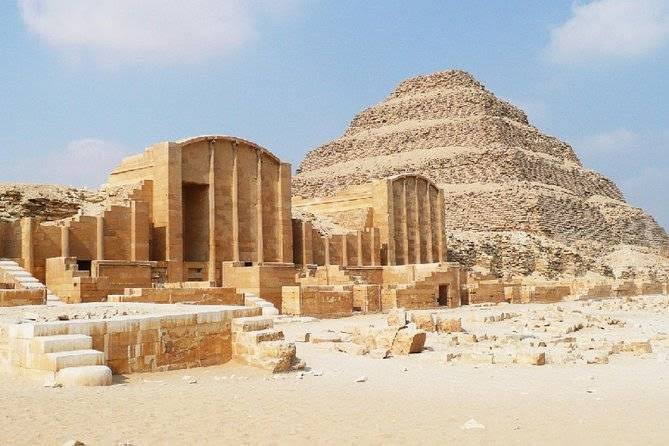
Memphis, Saqqara and the great necropolises of ancient Egypt
The vast necropolis area linked to Memphis stretched across the western desert and included many royal burial sites, among them Saqqara and Dahshur. Giza is also part of the wider funerary landscape of the Memphite region. Monumental pyramids and tombs bear witness to the power of the pharaohs and the extraordinary architectural skills of the ancient Egyptians. Because it is so close to Cairo, a visit to Memphis is easy to combine with other major archaeological sites – read our guides to the Saqqara pyramids and the Dahshur pyramids.
After the end of the Old Kingdom, the political importance of Memphis declined at times, but the city remained an important religious and strategic centre for a long time. During the New Kingdom, many rulers contributed to its development. Ramesses II left monumental statues here, some of which are now among the most impressive monuments at Mit Rahina. Memphis is easily reached from Cairo and makes an excellent introduction to pharaonic history before or after a visit to Saqqara.
From ancient Memphis to modern Cairo
The importance of Memphis gradually declined over the centuries, especially after Alexandria was founded in the time of Alexander the Great. Later, as new capitals grew in the area of today's Cairo, building materials from the ancient city were reused for new structures. Memphis slowly lost its monumental character, and Nile silt and farmland covered much of its remains.
Today, the open-air museum at Mit Rahina and the surrounding archaeological sites help you imagine the former glory of Memphis. Although the ancient city has almost entirely disappeared from the landscape, its statues, temple fragments and architectural remains still tell the story of one of Egypt's first great capitals. Memphis and its necropolis are part of the UNESCO World Heritage Site "Memphis and its Necropolis – the Pyramid Fields from Giza to Dahshur".
What to see in Memphis, Egypt
The remains of ancient Memphis can be visited mainly at Mit Rahina, about 20–25 km south of central Cairo. Much of the ancient city now lies beneath fields, palm groves and modern buildings. Even so, several exceptional monuments survive and help you understand the historical importance of Memphis.
The Memphis open-air museum at Mit Rahina
The highlight of the modern archaeological site is the open-air museum at Mit Rahina. Its most famous exhibit is a colossal limestone statue of Ramesses II, now displayed lying down in a covered pavilion. Despite damage over the centuries, the delicate facial features and finely carved details reveal the remarkable skill of ancient Egyptian sculptors.
The museum also displays other statues, monumental sculpture fragments, sphinxes, architectural elements and remains from different periods of Egyptian history. A visit to Memphis is particularly rewarding when combined with a trip to Saqqara and Dahshur.
The remains of the Temple of Ptah in Memphis
Of the huge Temple of Ptah, once the religious heart of Memphis, only foundations, stone blocks and architectural fragments survive. Although these remains may seem less impressive than the statues of Ramesses II, they are essential for understanding the religious role of Memphis and the cult of Ptah in ancient Egypt.
The Alabaster Sphinx and monuments of the Apis cult
Among the most precious monuments of Memphis is the famous Alabaster Sphinx, one of the site's most distinctive landmarks. Memphis was also closely linked to the cult of the sacred Apis bull, regarded as the living manifestation of the god Ptah. The surviving monuments help us understand the religious significance of Egypt's ancient capital.
Visiting Memphis – practical tips
How long: the open-air museum at Mit Rahina is compact – around an hour is usually enough.
Best combination: most travellers visit Memphis together with Saqqara and Dahshur on a full-day trip from Cairo, such as our Saqqara, Memphis and Dahshur day tour.
Best time: October to April is the most pleasant period; visit in the morning to avoid the midday heat.
Guided visit: because so little of the city survives above ground, a professional English-speaking Egyptologist guide makes a big difference in bringing ancient Memphis back to life.
Memphis was not just one of Egypt's first great capitals – it was the heart of a civilisation whose legacy still fascinates the whole world. Discover more of the region in our guide to the best things to do in Cairo.
Memphis, Egypt – frequently asked questions
Where is ancient Memphis?
The remains of Memphis are at Mit Rahina, about 20–25 km south of central Cairo, close to Saqqara.
Who founded Memphis?
Memphis was founded around 3100 BC and is traditionally attributed to King Menes, credited with unifying Upper and Lower Egypt.
What does Ineb-Hedj mean?
Ineb-Hedj, the ancient Egyptian name of Memphis, means "White Walls" and probably referred to fortifications linked to the royal residence.
What can you see at Memphis today?
The open-air museum at Mit Rahina displays a colossal statue of Ramesses II, the Alabaster Sphinx, other statues and the remains of the Temple of Ptah.
Is Memphis worth visiting?
Yes, especially when combined with Saqqara and Dahshur. Together they tell the story of Egypt's first capital and the evolution of the pyramids.
Visit Memphis, Saqqara and Dahshur with Sharara Tours
Discover Egypt's first capital and its great pyramid fields on a private day trip from Cairo with a professional English-speaking Egyptologist guide.
Memphis day tour Book now