Abydos and Sohag, Egypt: Where Egyptian History Begins
A complete guide to Abydos and Sohag: the Temple of Seti I, the Osireion, the royal necropolises and the highlights of Upper Egypt.
Sohag • Abydos • Temple of Seti I • Osireion • Upper Egypt • Egypt travel guide
Abydos, Egypt is one of the holiest sites of the ancient world and one of the most rewarding places to visit in Upper Egypt. In this guide, Sharara Tours introduces Abydos and the wider Sohag region – from the tombs of the first pharaohs and the exquisite Temple of Seti I to the Osireion, Coptic monasteries and daily life along the Nile.
Sohag, Egypt – what you need to know
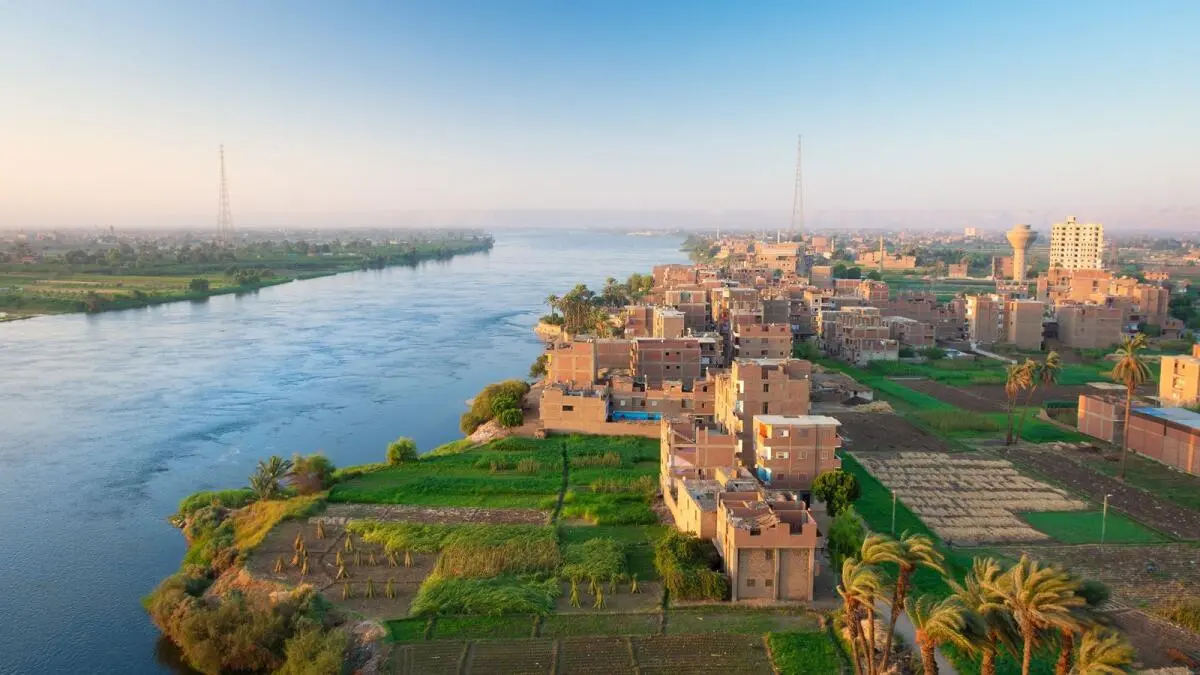
Sohag is a governorate in the heart of Upper Egypt, about 460 km south of Cairo, on the Nile. The region is one of the longest continuously inhabited areas in the world and holds many extremely important archaeological sites. Travellers who already know the Giza Pyramids but have never visited Sohag will discover a much less familiar side of the country here. The region's most famous site is Abydos, regarded in antiquity as one of Egypt's holiest religious centres.
Abydos – the sacred city of ancient Egypt
Abydos lies about 11 km west of the Nile, near the modern town of El-Balyana. It is one of the oldest and most important places of worship in human history. The first Egyptian rulers were buried here almost 5,000 years ago. The Umm el-Qaab necropolis preserves some of the oldest royal tombs in Egypt, linked to the first pharaohs of the dynastic period. For the ancient Egyptians, Abydos was closely associated with the cult of Osiris, and over time it became one of the country's most important pilgrimage sites.
Umm el-Qaab – the royal necropolis of the first pharaohs
Umm el-Qaab means "mother of pots" in Arabic. The name comes from the countless fragments of votive pottery left by pilgrims over thousands of years. The necropolis contains tombs of rulers from the predynastic period and the 1st and 2nd Dynasties – the time when the pharaonic state was born. One of the most famous is the tomb of King Djer, which in antiquity was venerated as the burial place of Osiris. Visiting Umm el-Qaab takes you back to the very beginnings of Egyptian civilisation.
The Abydos King List – the history of the pharaohs carved in stone
The Temple of Seti I houses the famous Abydos King List, showing 76 cartouches bearing the names of the rulers who preceded Seti I. It is one of the most important sources for reconstructing the chronology of ancient Egypt. Some pharaohs were deliberately left out, including Akhenaten and Tutankhamun, who were linked to the Amarna period – an era later rulers tried to erase from official history.
The Temple of Seti I at Abydos – a masterpiece of ancient Egypt
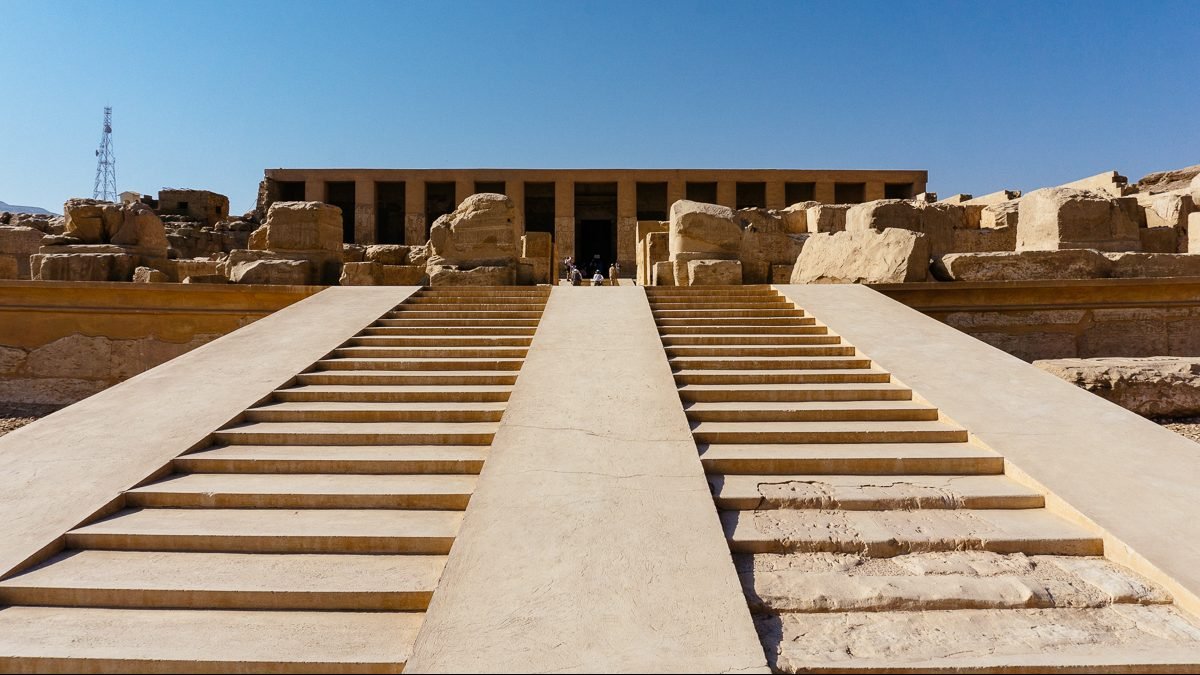
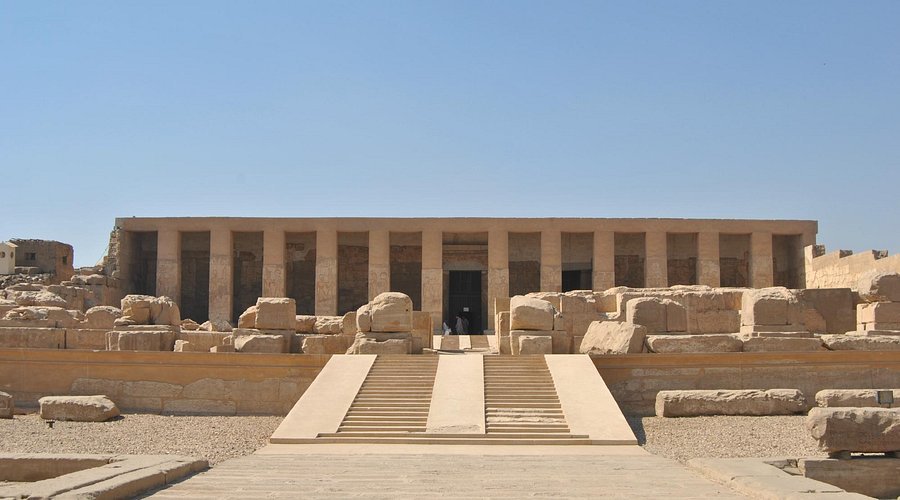
Step inside the Temple of Seti I at Abydos and you immediately understand why it is considered one of the finest monuments of ancient Egyptian architecture. Construction began under Pharaoh Seti I, a 19th Dynasty ruler and the father of Ramesses II. The temple was more than a royal monument: it was a vast sanctuary dedicated to the most important gods of the Egyptian pantheon.
Unique architecture – seven sanctuaries
The temple has a remarkable layout, with seven parallel sanctuaries dedicated to Horus, Isis, Osiris, Amun-Ra, Ra-Horakhty, Ptah and Seti I himself. This unusual design gives the building its unique character and brings several of the most important religious cults together in one temple complex.
The temple reliefs – the extraordinary precision of Egyptian art
The reliefs in the Temple of Seti I are among the most delicate and best-preserved examples of pharaonic art. In some places, traces of the original colours can still be seen, giving the ritual scenes remarkable vividness. Seti I is shown making offerings, burning incense and taking part in religious ceremonies. The precision of the carved lines and the elegance of the figures make the temple at Abydos a must-see for lovers of archaeology and Egyptian history.
The Osireion at Abydos – the mysterious sanctuary of Osiris
Just behind the Temple of Seti I lies one of the most enigmatic monuments of Abydos – the Osireion. Now partly flooded by groundwater, the complex was closely linked to the cult of Osiris and the ancient Egyptian idea of rebirth after death. Its construction began under Seti I and continued under his successors.
Architecture – a monumental structure hidden below ground
The Osireion lies well below the level of the main temple. At its centre is a monumental stone structure surrounded by water, often interpreted as a reference to Nun, the primeval ocean of Egyptian mythology. The huge stone blocks and austere architecture give it a completely different character from the richly decorated halls of the Temple of Seti I.
Ancient Egyptian texts on the afterlife
The inscriptions associated with the Osireion include important ancient Egyptian funerary and cosmological texts. They describe the sun's night-time journey through the underworld, its connection with Osiris and its rebirth at dawn. These stories help us understand how the ancient Egyptians saw death, rebirth and the eternal cycle of life.
Sohag – three religious traditions in one region
Sohag forms a remarkable religious mosaic in which different traditions and beliefs have overlapped for thousands of years. The pharaonic cult of Osiris, early Coptic Christian communities and later Islamic heritage have all left a lasting mark on the region's history. This blend of eras and cultures gives Sohag its exceptional historical and religious richness.
The White and Red Monasteries of Sohag – monuments of Christian Egypt
The White Monastery (Deir el-Abyad), associated with Saint Shenoute and flourishing in the 5th century, is one of the most important Christian monastic complexes in Upper Egypt. Its monumental architecture uses huge limestone blocks and reflects the transition from the pharaonic to the Christian era. Nearby stands the Red Monastery (Deir el-Ahmar), especially renowned for its exceptional, restored Coptic wall paintings.
Sohag today – the authentic face of Upper Egypt
Sohag is one of Upper Egypt's important farming regions. Sugar cane, wheat, cotton and sesame are grown on the fertile land along the Nile. The region has also kept many craft traditions. Akhmim, already known for its textiles in antiquity, is still famous for its colourful fabrics and embroidery. A trip to Sohag therefore reveals not only ancient monuments, but also the authentic rural life of modern Egypt.
Visiting Abydos and Sohag – what to see in Upper Egypt
Sohag and Abydos still lie off Egypt's most popular tourist trails. While the Giza Pyramids and Luxor's monuments attract millions of visitors, Abydos offers a much calmer atmosphere for exploring the Temple of Seti I, the Osireion and the ancient royal necropolises. For anyone interested in history, archaeology and pharaonic civilisation, a trip to Sohag and Abydos is a chance to get to know Egypt far more deeply than on standard routes.
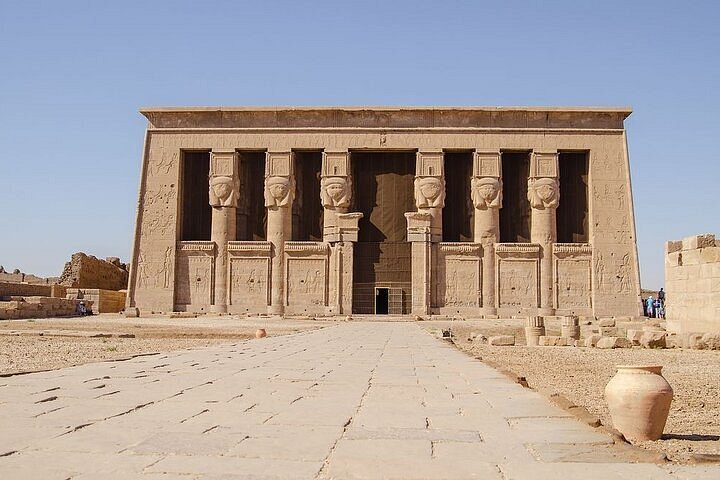
Recommended route: Sohag + Abydos + Dendera, with its Temple of Hathor. This combination adds more outstanding monuments of Upper Egypt to your trip. The easiest way to visit is from Luxor on our Dendera and Abydos tour from Luxor or our private 3-day Luxor, Abydos and Dendera tour.
Go with an expert: the reliefs of Abydos are full of details that are easy to miss. A professional English-speaking Egyptologist guide will help you read the King List, the offering scenes and the symbolism of the Osireion. Plan your visit between October and April for the most comfortable temperatures, and see our guide to the best things to do in Luxor for more ideas.
To truly get to know Egypt beyond the beaten track, discover Sohag and Abydos.
Abydos and Sohag – frequently asked questions
Where is Abydos in Egypt?
Abydos is in Sohag Governorate in Upper Egypt, about 11 km west of the Nile near El-Balyana, roughly 460 km south of Cairo.
What is Abydos famous for?
Abydos is famous for the Temple of Seti I with its exquisite reliefs and the Abydos King List, the mysterious Osireion and the Umm el-Qaab necropolis of the first pharaohs.
What is the Abydos King List?
It is a list of 76 royal cartouches in the Temple of Seti I naming the rulers before Seti I. It is a key source for ancient Egyptian chronology.
How do I visit Abydos from Luxor?
Abydos is a popular day trip from Luxor, often combined with the Temple of Hathor at Dendera. Sharara Tours organises this trip with a professional English-speaking Egyptologist guide.
Is Abydos worth visiting?
Yes. The Temple of Seti I has some of the finest reliefs in Egypt, and the site is much quieter than Luxor or Giza.
Discover Abydos and Dendera with Sharara Tours
Explore the Temple of Seti I, the Osireion and the Temple of Hathor on a private tour from Luxor with a professional English-speaking Egyptologist guide.
Dendera & Abydos tour Book now