Tutankhamun's Treasures at the Grand Egyptian Museum (GEM) in Giza
The golden death mask · The royal throne · Sarcophagi · The meteoric iron dagger · Treasures of tomb KV62
Tutankhamun's treasures are among the most fascinating collections of ancient Egypt. The young pharaoh reigned for only a few years, yet Howard Carter's discovery of his tomb, KV62, in the Valley of the Kings in 1922 made him one of the most famous figures in history. At the Grand Egyptian Museum (GEM) in Giza, near the pyramids, visitors can admire an extraordinary collection of funerary objects linked to Tutankhamun and learn more about his life, his era and ancient Egyptian beliefs. In this guide, Sharara Tours presents the highlights you should not miss.
Tutankhamun – the boy king and the discovery of tomb KV62
Tutankhamun ruled during the 18th Dynasty, in the 14th century BC. He came to the throne as a child and died very young, probably at around eighteen or nineteen. Although his reign was relatively short, he became world-famous after the discovery of tomb KV62 in the Valley of the Kings. The burial had largely escaped looting, so archaeologists found thousands of funerary objects. Howard Carter and his team spent many years documenting, conserving and studying this exceptional archaeological discovery.
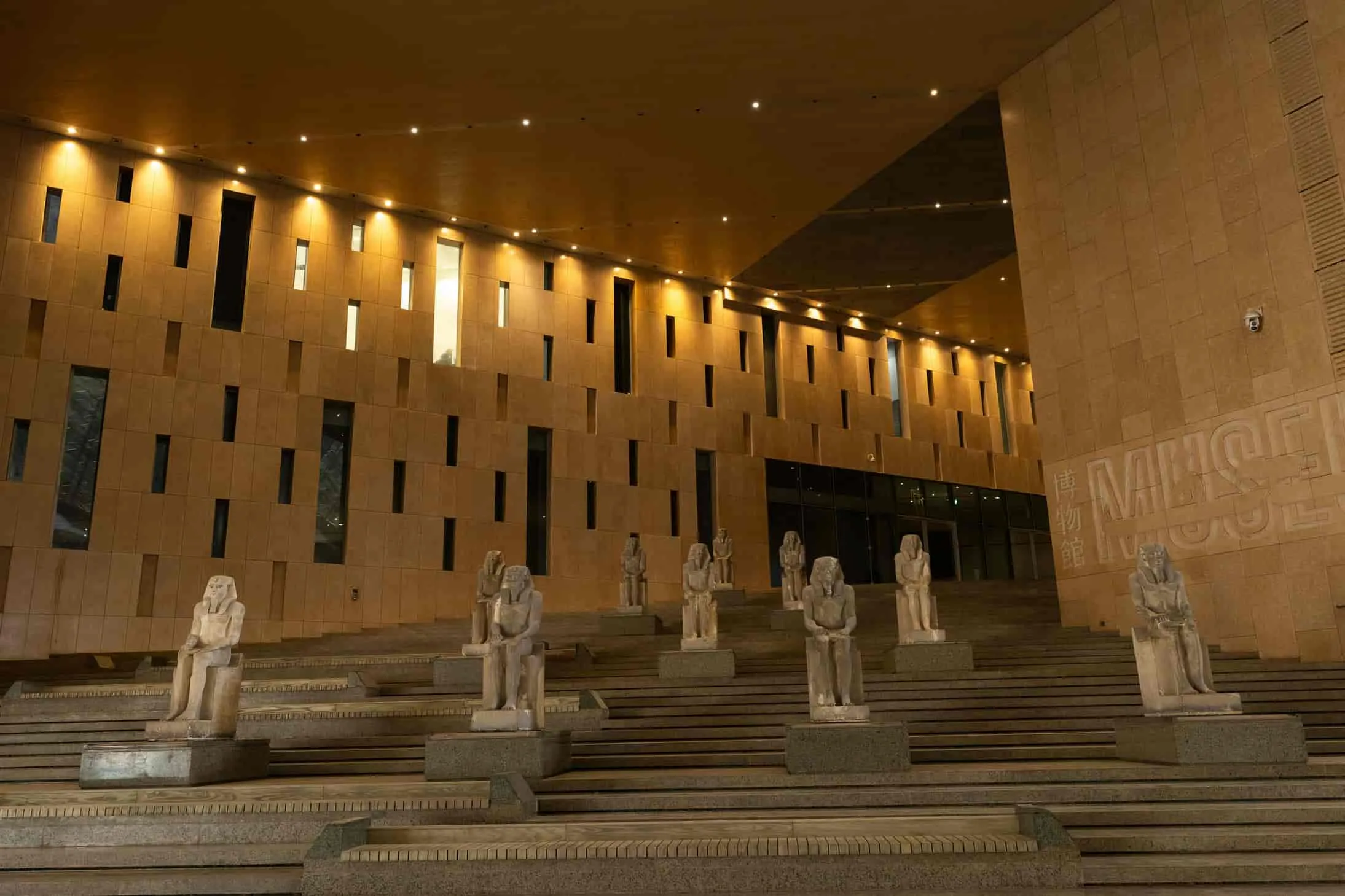
The Grand Egyptian Museum in Giza, close to the pyramids, was designed to present the Tutankhamun collection in a modern museum setting – read our full Grand Egyptian Museum visitor's guide. Beyond the gold and precious items, the exhibits reveal the remarkable skill of ancient Egyptian craftsmen in working wood, metal and semi-precious stones and in making royal furniture.
The golden mask of Tutankhamun – the pharaoh's most famous treasure
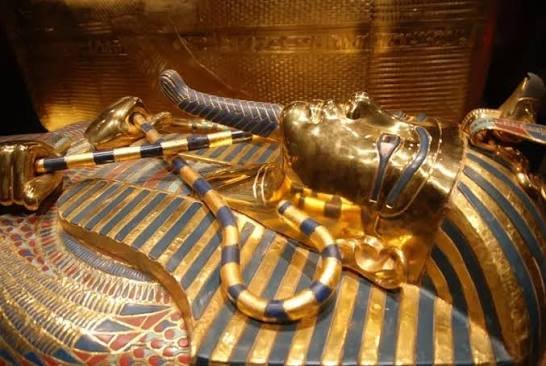
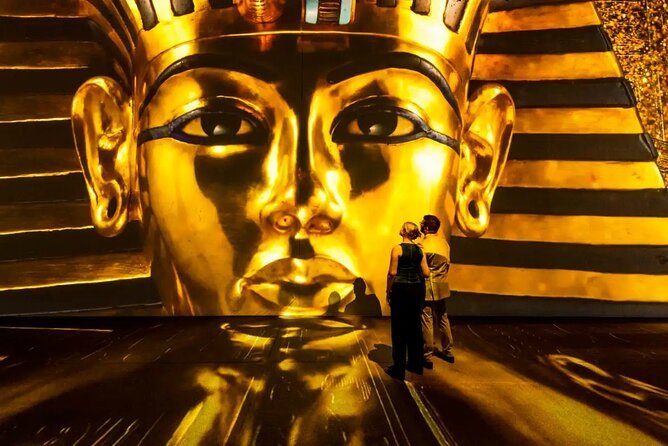
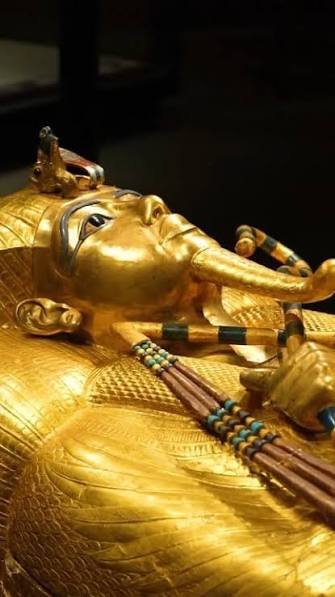
The golden death mask of Tutankhamun has become one of the most recognisable symbols of ancient Egypt. It is about 54 centimetres high and weighs more than 10 kilograms. It is made of gold combined with various decorative materials and semi-precious stones. The precision of its workmanship shows the extraordinary skill of the royal craftsmen of the 18th Dynasty.
The mask is a masterpiece of ancient Egyptian goldsmithing. Scientific studies have revealed the use of several gold alloys, chosen in part to create different shades on the face, the neck and other parts of the piece. This sophisticated technique gives the royal portrait a remarkably lifelike appearance.
Tutankhamun wears the royal nemes headdress, adorned with a cobra and a vulture linked to the goddesses Wadjet and Nekhbet, symbols of Lower and Upper Egypt. The colourful inlays and materials were not merely decorative. In ancient Egyptian funerary belief, colours, symbols and materials were also meant to protect the king on his journey to the afterlife.
The mask's gaze is particularly striking. Its dark eyes and finely rendered features make the portrait seem almost alive. More than 3,300 years after the young pharaoh's death, it remains one of the most moving and recognisable works of ancient Egyptian art.
Protective hieroglyphic inscriptions cover the back and shoulders of the mask. They belong to the tradition of funerary texts designed to keep the deceased safe. Tutankhamun's mask is therefore at once a masterpiece of art, a royal ceremonial object and an important testimony to ancient Egyptian religious beliefs.
Tutankhamun's golden throne – an exceptional work of ancient Egyptian art
One of the most precious objects linked to Tutankhamun is his famous golden throne. It is made of wood covered in gold and decorated with inlays and precious materials. The backrest shows an intimate scene between the pharaoh and his wife Ankhesenamun: the queen is applying perfumed oil to the king's shoulder. This composition offers a rare glimpse of how the private life of a royal couple was depicted in ancient Egyptian art.
Tutankhamun's sarcophagus and coffins – secrets of a royal burial
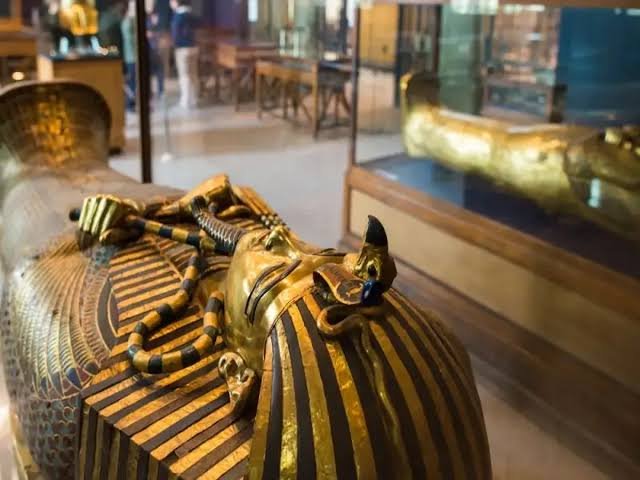
In the burial chamber, Tutankhamun's mummy was protected by an elaborate system of shrines, a sarcophagus and anthropoid coffins. The innermost coffin, made of solid gold, is one of the most extraordinary objects found in the tomb. Together, they show how much importance the ancient Egyptians placed on protecting the pharaoh's body and preparing it for the journey to the afterlife.
Tutankhamun's dagger made of meteoric iron
Tutankhamun's meteoric iron dagger is one of the most surprising objects found in his tomb. X-ray fluorescence analysis showed that the composition of the metal matches iron of meteoritic origin. At a time when ironworking was still relatively rare in Egypt, material from a meteorite must have had exceptional value, both technical and symbolic.
Chariots, jewellery, furniture and Tutankhamun's folding bed
Parts of several dismantled chariots were discovered in Tutankhamun's tomb. These royal vehicles reflect not only the prestige of the pharaoh's court, but also the importance of chariots in travel, ceremonies and displays of power during the New Kingdom.
The treasures also include jewellery, sandals, walking sticks, fans, musical instruments and finely made furniture. One of the most original objects is a cleverly designed folding bed. These finds tell us not only about the pharaoh's burial, but also about life at the royal court, craft techniques and the daily life of Egypt's rulers in the New Kingdom.
Tips for seeing Tutankhamun's treasures at the GEM
Allow enough time: the Tutankhamun galleries alone deserve at least an hour or two, and the whole museum can easily take half a day.
Combine with the pyramids: the GEM is about 2 km from the Giza Pyramids, so it is easy to see both in one day – for example on our private Giza Pyramids and Grand Egyptian Museum tour.
Go with an expert: a professional English-speaking Egyptologist guide brings the objects to life by explaining their symbolism and the story of Carter's discovery.
Then see the tomb: to complete the story, visit tomb KV62 itself in the Valley of the Kings – see our guide to the best things to do in Luxor.
The pyramids show the monumental power of ancient Egypt. Tutankhamun's treasures reveal its more personal side.
Why do Tutankhamun's treasures at the Grand Egyptian Museum fascinate the world?
The Tutankhamun collection at the Grand Egyptian Museum lets you discover ancient Egypt from an unusually close perspective. The Giza Pyramids symbolise the monumental power of the pharaohs, while the objects from tomb KV62 reveal a far more personal world: clothes, furniture, jewellery, ritual objects and masterpieces of goldsmithing meant to accompany the young king on his way to eternity.
On a trip to Cairo and Giza, visiting the Grand Egyptian Museum is the perfect complement to the pyramids. It takes you from monumental architecture to the personal belongings and funerary treasures of the pharaohs – and among them, Tutankhamun holds a very special place. More than three thousand years after his death, his treasures still tell the world the fascinating story of ancient Egypt.
Tutankhamun's treasures – frequently asked questions
Where is Tutankhamun's golden mask displayed?
Tutankhamun's collection, including his famous golden mask, is presented at the Grand Egyptian Museum (GEM) in Giza, near the pyramids.
When was Tutankhamun's tomb discovered?
Howard Carter discovered tomb KV62 in the Valley of the Kings in 1922. It had largely escaped looting and contained thousands of objects.
How heavy is Tutankhamun's golden mask?
The mask is about 54 cm high and weighs more than 10 kg. It is made of gold alloys with inlays of decorative materials and semi-precious stones.
What is Tutankhamun's meteorite dagger?
It is an iron dagger found in his tomb. X-ray fluorescence analysis showed that its iron is of meteoritic origin, making it extremely valuable at the time.
Can I see Tutankhamun's tomb as well?
Yes. Tomb KV62 is in the Valley of the Kings on Luxor's West Bank. Many travellers see the treasures at the GEM and the tomb in Luxor on the same trip.
See Tutankhamun's treasures with Sharara Tours
Visit the Grand Egyptian Museum and the Giza Pyramids on a private tour with a professional English-speaking Egyptologist guide. We organise trips from Cairo and from the Red Sea resorts.
Grand Egyptian Museum tour Book now