Minya, Egypt: History, Ancient Sites and Hidden Gems of Middle Egypt
Discover a region where time seems to stand still
Minya – an extraordinary journey through Egyptian history
Some places don't just belong to the past – their history still feels alive. Minya (Al-Minya) in Middle Egypt is one of them. Stretching between the fertile Nile Valley and the limestone cliffs of the desert, this region has been shaped for thousands of years by the pharaohs, the Greco-Roman world, Coptic Christianity and Islam. Visiting Minya reveals a lesser-known side of Egypt, where ancient archaeological sites and everyday modern life meet at almost every turn.
In this guide, the travel team at Sharara Tours introduces the highlights of Minya: the rock-cut tombs of Beni Hassan, Akhenaten's lost capital at Tell el-Amarna, the necropolis of Tuna el-Gebel and the region's rich Coptic and Islamic heritage – plus practical tips for planning your visit.
Thousands of years of history on the Nile
The pharaonic heritage of Minya
Long before the Greco-Roman era, the Nile Valley around Minya played an important role in the territorial organisation of ancient Egypt. The region was linked to several nomes (provinces) of Upper Egypt and to important religious and administrative centres. Among the ancient place names associated with the area is Menat Khufu, a reminder of its deep-rooted pharaonic heritage.
Much of the region's importance came from its location. The Nile watered a narrow strip of farmland, while the desert cliffs on the east and west banks hid necropolises and quarries. This contrast between the fertile valley and the rocky desert strongly shaped the burial customs and religious beliefs of the ancient Egyptians.
The Middle Kingdom and the rise of the provinces
During the Middle Kingdom, around 2055–1650 BC, the region went through a particularly important period of development. Provincial governors (nomarchs) held considerable power and commissioned large rock-cut tombs. Today, the Beni Hassan tombs are among the finest testimonies to the prosperity of that era and offer exceptional insight into ancient Egyptian society.
Tell el-Amarna – the ancient capital of Pharaoh Akhenaten
A religious revolution in ancient Egypt
Tell el-Amarna is one of the most fascinating archaeological sites in the Minya region. On a vast plain on the east bank of the Nile, surrounded by limestone cliffs, Pharaoh Amenhotep IV decided to build a new capital – Akhetaten, the "Horizon of the Aten".
Better known as Akhenaten, Amenhotep IV broke decisively with the religious traditions of his time and placed the sun disc, the Aten, at the centre of royal worship. His reform in the 14th century BC upset the religious and political balance of New Kingdom Egypt. It remains one of the most debated episodes in Egyptology. Ongoing research at the site is documented by the Amarna Project.
Akhetaten – the city of the Aten
Within just a few years, Akhenaten ordered an entirely new capital to be built. The city included great temples dedicated to the Aten, palaces, administrative buildings, residential districts and wide avenues. Sacred architecture favoured open-air courts, so that the sun's rays could shine directly onto the altars.
Nefertiti holds a special place in the art of the Amarna period. Shown beside Akhenaten in many religious and family scenes, she probably played a particularly important political and religious role. Her famous bust has become one of the most recognisable works of ancient Egyptian art.
Amarna art differed clearly from traditional conventions. Images of the royal family became more relaxed and natural. Akhenaten, Nefertiti and their daughters were shown in intimate family scenes, beneath the rays of the Aten ending in tiny hands.
The fall of Akhetaten and the end of Akhenaten's reforms
After Akhenaten's death, the circumstances of which are still debated, his religious reforms were gradually abandoned. Tutankhaten took the name Tutankhamun, and the worship of Egypt's traditional gods was restored. Akhetaten soon lost its status as capital. It was largely deserted, and many of its buildings were dismantled or reused.
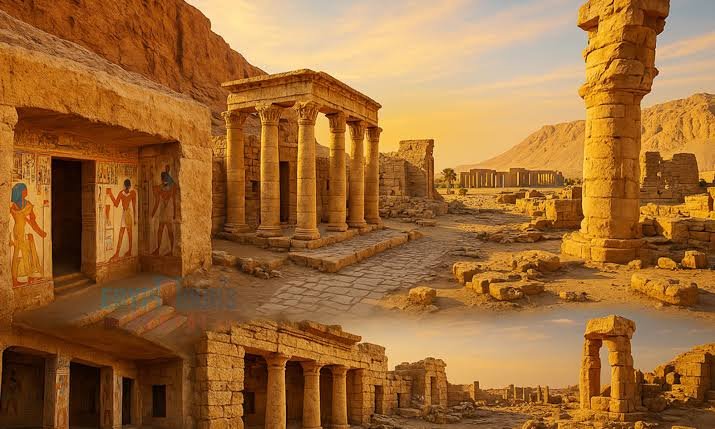
Today, Tell el-Amarna still preserves traces of this unique political and religious experiment. Rock-cut boundary stelae marked the territory of the new capital, while the tombs of officials preserve characteristic scenes of Amarna art. The wide, sparsely built-up site still lets visitors read the general layout of the ancient city.
The Beni Hassan tombs – ancient Egyptian history carved in rock
Ancient tombs that tell the story of Egyptian life
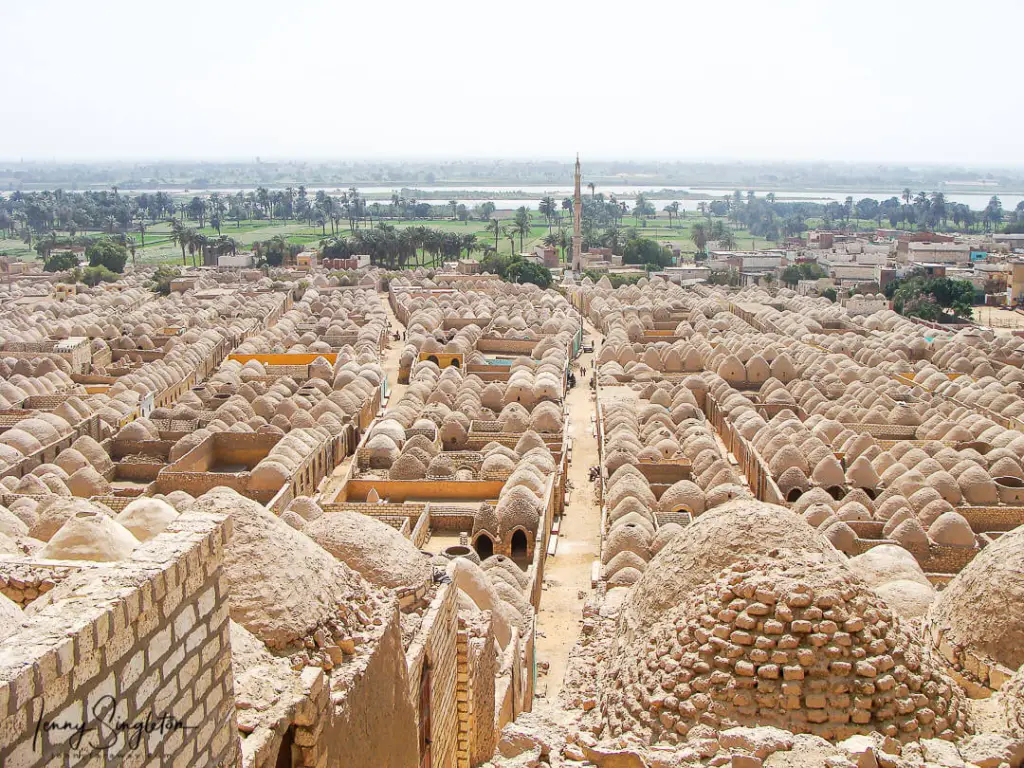
About 20 kilometres south of Minya city, in the cliffs on the east bank of the Nile, lie the rock-cut tombs of Beni Hassan. This necropolis is one of the most important Middle Kingdom burial sites. It is an exceptionally valuable source of knowledge about daily life, administration and funerary customs of the period.
Dozens of tombs were cut into the hillside, and some of them still preserve rich painted decoration. They belonged to provincial governors such as Amenemhat, Khnumhotep II, Baqet and Khety.
Daily life in ancient Egypt on the tomb walls
The decoration of the Beni Hassan tombs is especially valuable because it shows many everyday activities: farming, fishing, crafts, music, travel and trade. These scenes help us understand Egyptian society during the Middle Kingdom.
Among the most remarkable images are the famous wrestling scenes. Hundreds of figures demonstrate different holds and positions, offering unique insight into physical training and fighting techniques in ancient Egypt.
The tomb of Khnumhotep II contains a well-known scene showing a group of people arriving in Egypt from Western Asia with their belongings and animals. Researchers often study this painting as evidence of migration and of Egypt's contacts with neighbouring regions during the Middle Kingdom.
The architecture of the Beni Hassan tombs
The tombs also stand out for their architecture: rock-cut façades, columned halls and ceilings decorated with geometric patterns. The combination of funerary architecture, narrative painting and relatively well-preserved decoration makes a visit to Beni Hassan especially rewarding.
Tuna el-Gebel – an ancient necropolis and the secrets of Egypt's gods
On the borders of ancient Akhetaten
West of the Nile Valley, at Tuna el-Gebel, stands one of the boundary stelae of Akhetaten. Carved into the rock, it shows Akhenaten, Nefertiti and their family beneath the rays of the Aten, accompanied by inscriptions defining the limits of the new capital.
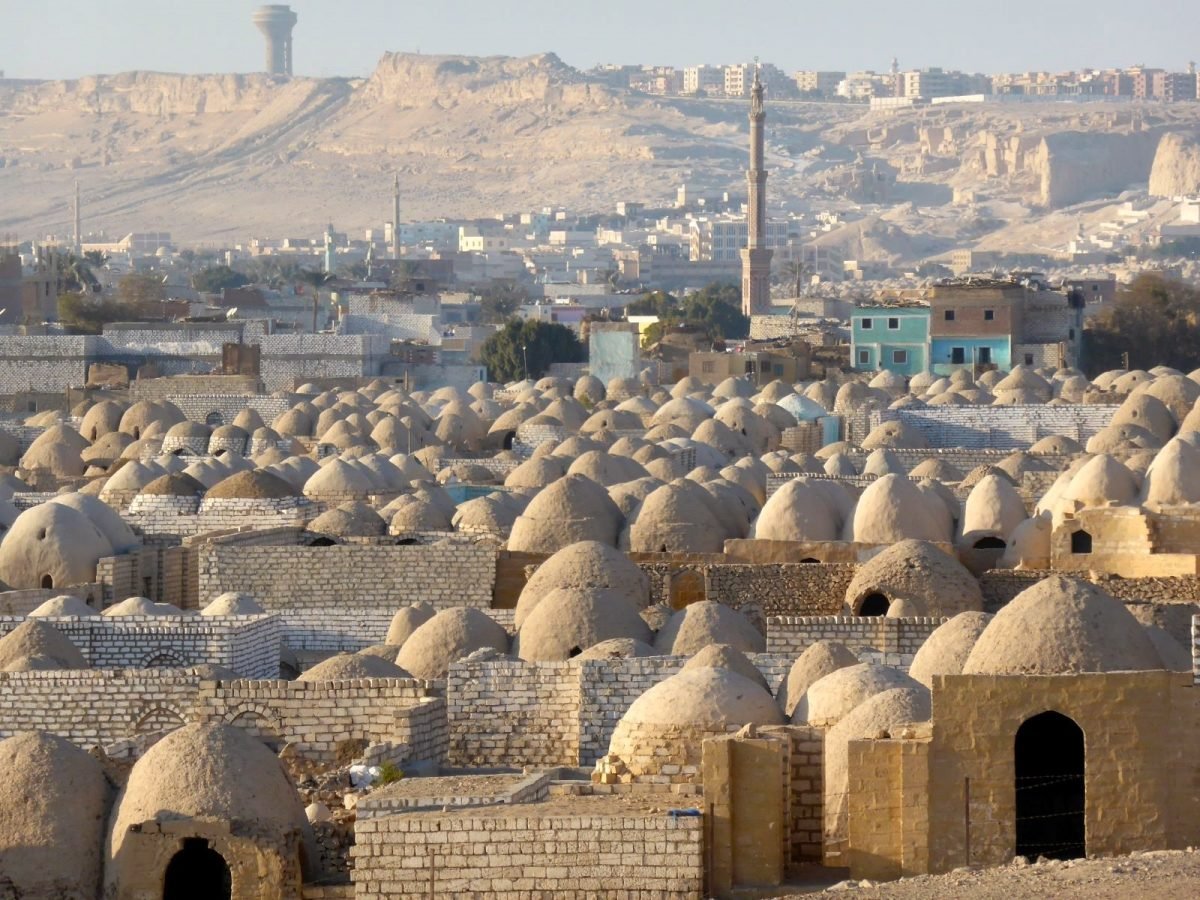
Above all, however, Tuna el-Gebel is a vast necropolis linked to ancient Hermopolis – called Khmunu by the Egyptians and Hermopolis Magna by the Greeks. The city was closely associated with the cult of Thoth, god of writing, wisdom and knowledge.
Underground galleries of sacred animals
Beneath the desert lies an extensive network of burial galleries holding a huge number of animal mummies. Ibises and baboons, both closely linked to the god Thoth, take pride of place.
These finds reflect votive practices that were widespread in certain periods of Egyptian history. Pilgrims could offer a mummified animal associated with a deity as an expression of devotion and a request for divine favour.
The tomb of Isadora at Tuna el-Gebel
Among the monuments of Tuna el-Gebel is the tomb of Isadora, a young woman of the Greco-Roman era whose story has become one of the best-known tales connected with the site. According to tradition, she drowned in the Nile. Her funerary monument and the texts associated with it give this part of the necropolis a particularly personal, human dimension.
Minya's Coptic heritage and Islamic culture
The legacy of Coptic Christianity
Minya has an exceptionally rich Coptic Christian heritage. Monasteries, churches, local traditions and Christian communities all bear witness to the long history of Christianity in Middle Egypt.
According to Egyptian Christian tradition, the Holy Family visited several places in what is now the Minya region. The Monastery of the Virgin Mary at Gabal el-Teir, set on a hill above the Nile, is one of the most important sites on this route and remains a major Coptic pilgrimage centre.
Islam and Christianity in Minya's history
From the 7th century onwards, Islam gradually became part of the region's history. Over the following centuries, Muslim and Christian communities shared the same towns, villages and farmland. This shared, complex and sometimes tense history is part of Minya's identity today.
Minarets, mosques, churches and monasteries now form a religious landscape that reflects the many layers of local history.
Minya today – life and traditions in Middle Egypt
A strong bond with the land and the Nile
Minya is not just a collection of archaeological sites. It is also a lively agricultural and academic region. The fertile Nile Valley still shapes the daily lives of many families and links the modern landscape to centuries of farming tradition.
In the valley villages, agriculture remains closely tied to irrigation systems and the rich soils of the Nile. Fields, palm groves, livestock and local markets are an integral part of the landscape that travellers discover between the historic sites.
Traditional crafts and local culture
The region has kept a variety of craft traditions, including weaving, pottery and woodwork. Local markets and villages reveal a culture that goes far beyond ancient monuments. As a result, a slow journey through Middle Egypt becomes a truly memorable experience.
Minia University and the modern city
Minya is also an important academic centre in Middle Egypt. Minia University, founded in 1976, now educates many students and contributes to the educational, scientific and cultural development of the region.
Practical tips for visiting Minya
Getting to Minya
Minya lies on the Nile roughly 250 kilometres south of Cairo. The city sits on Egypt's main north–south railway line, and it can also be reached by road from Cairo. Because the main sites are spread out on both banks of the river, most visitors explore them by private car with a driver and guide.
Best time to visit
The most comfortable months are from October to April, when temperatures are mild. In summer, the heat in Middle Egypt can be intense, so start early in the morning and carry plenty of water.
Why go with a guide?
Minya's sites are less developed for tourism than those of Luxor or Giza, and travel arrangements in Middle Egypt can involve local procedures. A professional English-speaking Egyptologist guide brings the tombs and ruins to life and takes care of the logistics, so you can focus on the history.
Minya – lesser-known Egyptian treasures worth discovering
Minya in Egypt offers a completely different experience from the classic tourist routes through Cairo, Luxor or Aswan. The Beni Hassan tombs, the remains of Tell el-Amarna and the necropolis of Tuna el-Gebel reveal several key eras of Egyptian history. At the same time, the region is still relatively rarely visited by foreign tourists.
For travellers passionate about history, archaeology and authentic Egypt, Minya definitely deserves a place in any Middle Egypt itinerary. If you want to combine it with Egypt's other great sites, explore our Egypt tour packages, our Cairo tours or our Luxor tours, and find more inspiration in our Egypt travel guide.
"Egypt is the gift of the Nile" – and Minya reveals one of the deepest layers of its history.
Minya, Egypt – frequently asked questions
Is Minya worth visiting?
Yes, especially if you love history. Minya is home to the Middle Kingdom tombs of Beni Hassan, Akhenaten's capital at Tell el-Amarna and the necropolis of Tuna el-Gebel – and it sees far fewer tourists than Luxor or Giza.
How far is Minya from Cairo?
Minya is roughly 250 km south of Cairo along the Nile. You can get there by train on the main Cairo–Upper Egypt line or by road with a private driver.
What are the main sights in Minya?
The highlights are the rock-cut tombs of Beni Hassan, the ruins and tombs of Tell el-Amarna, the necropolis of Tuna el-Gebel with the tomb of Isadora, and Coptic sites such as the Monastery of the Virgin Mary at Gabal el-Teir.
When is the best time to visit Minya?
October to April offers the most pleasant temperatures for sightseeing. In summer, plan visits for the early morning to avoid the strongest heat.
Can I visit Minya with an English-speaking guide?
Yes. Sharara Tours can arrange private trips with a professional English-speaking Egyptologist guide. Send us a request with your dates and we will help you plan the route.
Plan your Middle Egypt adventure with Sharara Tours
Want to see Egypt beyond the crowds? Tell us your travel dates and interests, and our team will put together a private itinerary with a professional English-speaking Egyptologist guide.
Book now Send a request