Deserts of Egypt: The Sahara, Oases and Unforgettable Adventures
Western Desert · Eastern Desert · Sinai · 5 oases · Jeep safaris · Nights in the desert · Camel rides
Western Desert · Eastern Desert · Sinai · Siwa Oasis · Bahariya Oasis · White Desert · Jeep safaris · Desert camping · Trekking · Oasis tours in Egypt
Two deserts, one extraordinary world – Egypt's west and east
More than two-thirds of Egypt's territory is desert. Yet, contrary to appearances, the deserts of Egypt are neither empty nor monotonous. The west of the country, known as the Libyan Desert, amazes with dunes, rocky plateaus, oases and classic Sahara landscapes. In the east, the Arabian Desert forms mountainous terrain between the Nile Valley and the Red Sea. And then there is Sinai, the mountainous peninsula between Africa and Asia, famous for Mount Sinai and Saint Catherine's Monastery. The vast majority of Egyptians live along the Nile and in its delta, while these huge desert spaces reveal a completely different, wild and adventurous side of the country. In this guide, Sharara Tours introduces Egypt's deserts, oases and the best desert experiences.
The Western Desert – in the heart of the Egyptian Sahara
Around 700,000 km² of sand, rock and extraordinary silence. The Western Desert begins west of the Nile Valley and stretches to the remote reaches of the Sahara. After leaving Cairo, the urban landscape gradually gives way to rocky plateaus, golden sand and endless horizons. Five great oases appear like green islands in this vast landscape. The White Desert with its chalk formations, the Black Desert, the Great Sand Sea and the Qattara Depression make the Western Desert one of Egypt's most fascinating natural regions.
In the south-west, near the Libyan border, the Great Sand Sea covers tens of thousands of square kilometres of dunes. Expeditions to this remote region require proper 4×4 vehicles, careful preparation and experienced guides.
The White Desert in Egypt – sculptures shaped by nature
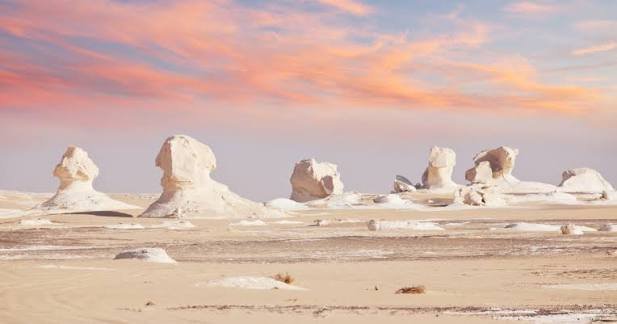
Between Bahariya and Farafra lies one of Egypt's most extraordinary natural landscapes – the White Desert. Over millions of years, erosion has sculpted the chalk rocks into fantastic shapes resembling mushrooms, towers and animal silhouettes. In the sunshine, the white rocks contrast with the blue sky; by moonlight, the landscape seems almost unreal. A night in the White Desert, by a campfire under a sky full of stars, is one of the most memorable experiences of any journey through the Egyptian Sahara. North of Bahariya, the Black Desert impresses with the contrast of dark hills and volcanic rocks rising from golden sand.
The 5 great oases of Egypt's Western Desert
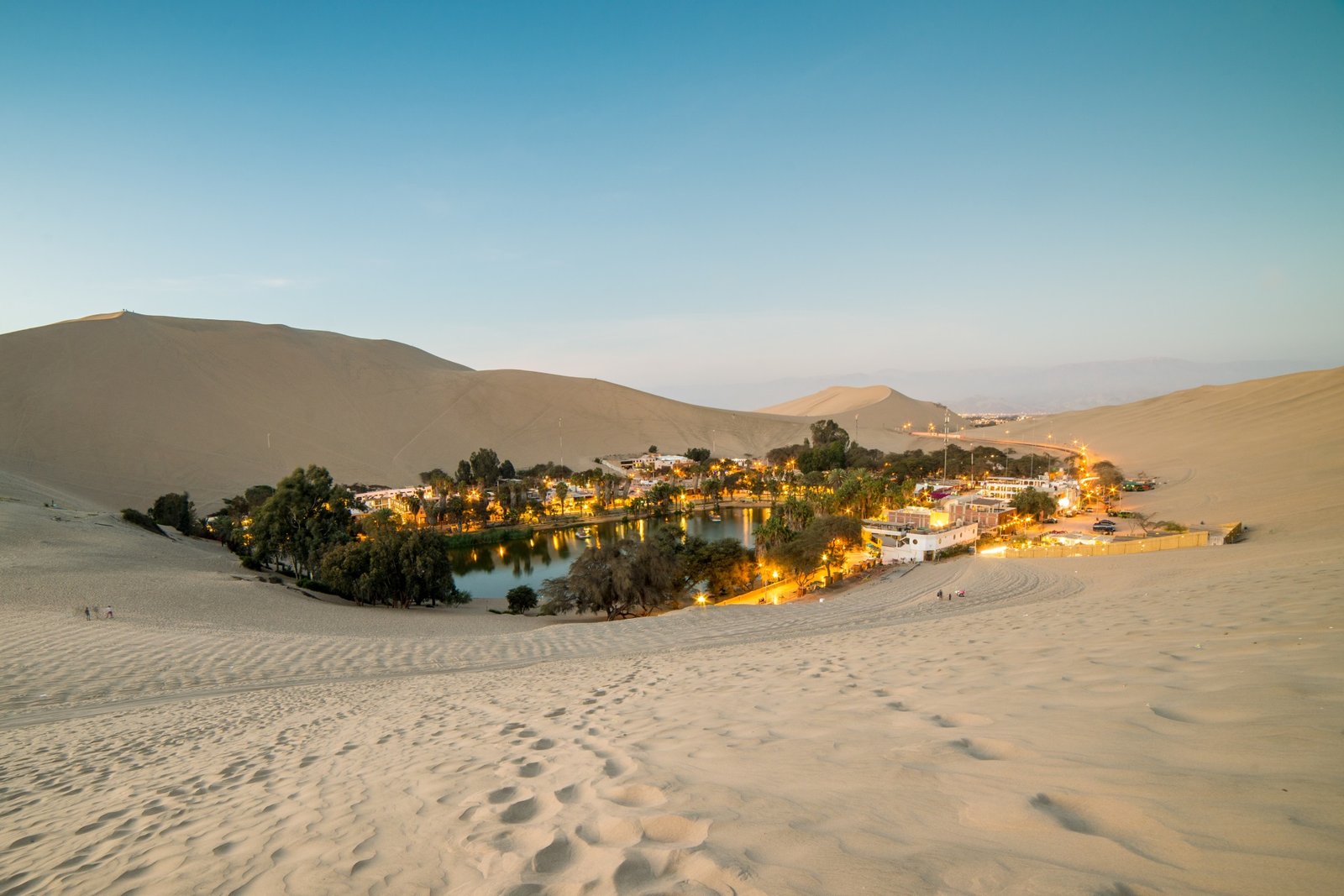
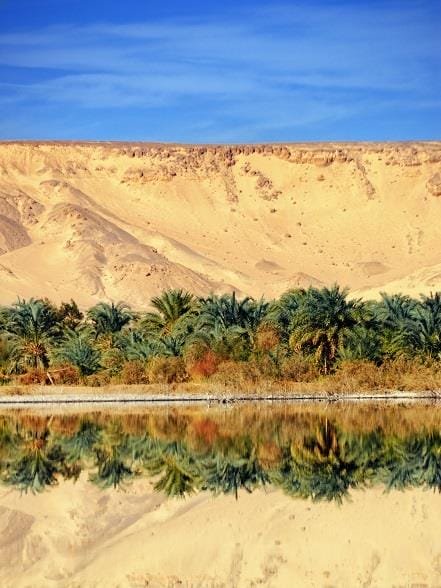
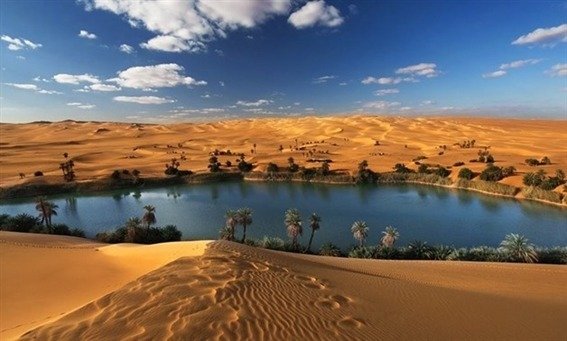
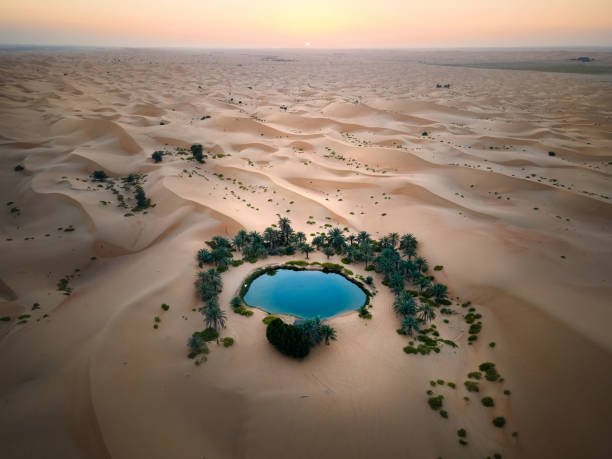
The oases of the Western Desert are much more than water sources in the sand. Each has its own history, landscapes, traditions and character. Siwa, Bahariya, Farafra, Dakhla and Kharga reveal an Egypt very different from the one you know from the Nile Valley.
Siwa – Egypt's legendary oasis
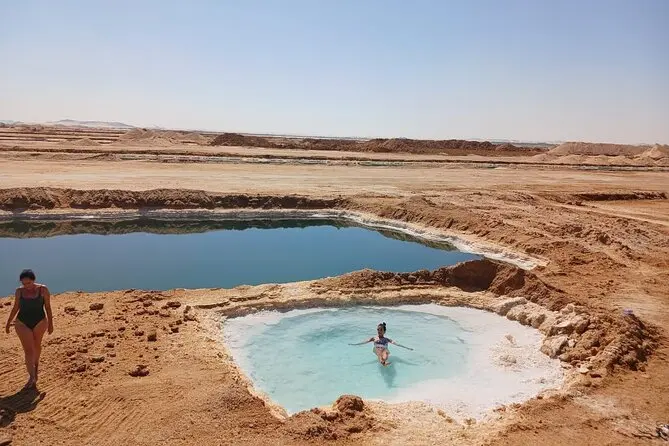
About 560 km west of Cairo, near the Libyan border, Siwa Oasis is one of the most isolated and unique places in Egypt. Alexander the Great visited its Oracle of Amun in 331 BC, and the remains of the temple can still be seen today. The oasis has kept a strong Amazigh identity, the local Siwi language and distinctive craft traditions. The mudbrick ruins of the Shali fortress tower over the town, while salt lakes, palm groves and the dunes of the Great Sand Sea create remarkable landscapes. One of the best-known spots is the spring known as Cleopatra's Spring. Life moves more slowly here, and the atmosphere is very different from Egypt's big cities.
Bahariya – gateway to the White Desert
Bahariya is one of the most accessible oases from Cairo, about a four-hour drive away. It is the classic starting point for safaris to the Black and White Deserts. The oasis is also famous for the Valley of the Golden Mummies, where numerous Greco-Roman burials were discovered in the 1990s, and for its natural hot springs – especially welcome after a day of desert safari.
Farafra – a peaceful oasis by the White Desert
Farafra is the smallest and one of the quietest of the main western oases. Its location near the White Desert makes it a natural stop on many safaris starting in Bahariya. Camps and simple guesthouses let you spend the night close to spectacular desert scenery.
Dakhla – history and remarkable landscapes
Dakhla is best known for El-Qasr, a historic Islamic town with mudbrick houses, narrow lanes and carved wooden architectural details. The oasis also has hot springs, desert roses and a remarkable natural heritage, and visitors can try sandboarding. Palaeontological finds in the region, including dinosaur fossils, show that the environment here was once completely different from today's desert.
Kharga – an ancient oasis on the caravan route
Kharga is the largest oasis of the Western Desert and one of the oldest. For centuries it was an important stop on the Darb el-Arbain, the ancient caravan route linking the interior of Africa with Egypt. Its best-known monument is the Temple of Hibis, dating back to the Persian period. Today, Kharga is a lively town that relatively few tourists visit, ideal for discovering both caravan history and everyday oasis life.
Bahariya Oasis and the White Desert – where the desert adventure begins
The route Bahariya → Black Desert → Crystal Mountain → Agabat Valley → White Desert → Farafra is one of the most popular ways to discover the Egyptian Sahara. The classic option is a two-day safari from Cairo with a night at a camp in the White Desert. Travellers with more time can continue to Farafra, Dakhla and Kharga on a multi-day oasis tour.
The Eastern Desert – red mountains between the Nile and the Red Sea
The Eastern Desert, also called the Arabian Desert, stretches between the Nile Valley and the Red Sea coast. Here, sand dunes give way to red, black and ochre mountains, canyons, dry wadis, ancient trade routes and old mining areas. Though less known than the Western Desert, it offers spectacular scenery and an exceptionally rich historical heritage.
Wadi Hammamat served for thousands of years as an important route linking the Nile with the Red Sea, and many ancient inscriptions survive on its rock walls. The Eastern Desert is also home to the monasteries of Saint Anthony and Saint Paul, two of the most important sites of Egyptian Christianity. Former mining areas show that gold was extracted here as early as pharaonic times.
The Eastern Desert is also the easiest desert to reach from the Red Sea resorts. From Hurghada, you can head into the desert on our Hurghada desert safari tours, such as the Super Safari or the Jeep Safari, led by an English-speaking safari guide.
Desert safaris in Egypt – the best trips and experiences
Day trips into the desert
Overnight stays and desert camping
Camel rides offer a slower experience that echoes the rhythm of the old desert caravans.
A night in the Egyptian desert – unforgettable under the stars
Spending a night in the Egyptian desert, far from city lights, lets you experience extraordinary silence and a night sky you will never forget. In the White Desert, camps are often set up among the chalk formations. A campfire, Bedouin tea, a warm dinner and a night under the stars create a unique atmosphere. With no light pollution, in good conditions you can see the Milky Way clearly. At sunrise, the white rocks turn shades of pink, gold and orange – one of the most memorable moments of a desert safari in Egypt.
The best desert tour routes in Egypt
Classic two-day trip
Four-day oasis tour
Siwa Oasis expedition
Seven-day Egypt oasis tour
Eastern Desert trip
People of the Egyptian desert – Amazigh, Bedouin and local guides
The desert is also home to people. In Siwa, Amazigh culture preserves its own language, traditions and crafts. In the Eastern Desert and Sinai live various Bedouin communities, including the Ababda, the Bishari and the Jebeliya, whose knowledge of the dry wadis and desert trails has been passed down for generations. Travelling with an experienced local guide or an English-speaking safari guide not only makes moving through the desert safer, but also helps you understand its landscapes, traditions and history.
When to visit Egypt's deserts – best season and tips
October to April is usually the most comfortable period for exploring the Egyptian desert. Daytime temperatures are around 20–30°C, while nights can be cool or even cold. From May to September, the heat can be extreme. That is why the best time for a desert safari, trekking or camping in Egypt is the cooler part of the year.
On any multi-day trip, travel with a professional local guide, carry plenty of water, and pack sun protection, a hat and layers of clothing for the big temperature differences between day and night.
The Egyptian desert – much more than a landscape
Temples and pyramids show only part of Egypt. The White Desert, the oases of Siwa and Dakhla, the ancient inscriptions of Wadi Hammamat and the Great Sand Sea at sunset reveal a calmer, wilder side of the country, deeply marked by its history. Combine a desert adventure with the Nile or the Red Sea – read our guides to the Nile River in Egypt and Egypt's Red Sea resorts.
The desert is not empty. It reveals one of the most extraordinary faces of Egypt.
Deserts of Egypt – frequently asked questions
What deserts are in Egypt?
Egypt has the Western Desert (Libyan Desert), part of the Sahara; the Eastern Desert (Arabian Desert) between the Nile and the Red Sea; and the mountainous Sinai Peninsula.
How do you get to the White Desert from Cairo?
Most trips start in Bahariya Oasis, about a four-hour drive from Cairo. From there, 4×4 vehicles continue through the Black Desert to the White Desert, often with an overnight camp.
When is the best time for a desert safari in Egypt?
October to April. Days are pleasant at around 20–30°C, while summer heat from May to September can be extreme.
Can I do a desert safari from Hurghada?
Yes. The Eastern Desert starts just outside Hurghada, and jeep, quad and super safaris with Bedouin village visits run there with an English-speaking safari guide.
Is it safe to camp in the Egyptian desert?
Camping in popular areas such as the White Desert is done with organised tours and experienced local guides who know the terrain, routes and conditions. Always travel with a professional operator.
Experience the Egyptian desert with Sharara Tours
From jeep and quad safaris near Hurghada and Marsa Alam to unforgettable trips beyond the Nile Valley, we will help you plan your desert adventure with an English-speaking safari guide.
Desert safari tours Book now